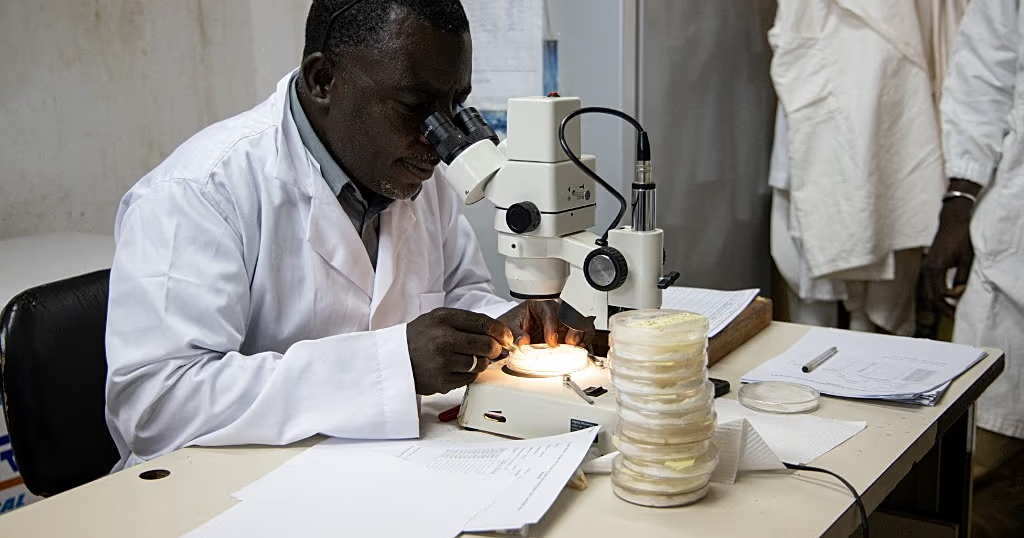
History is now being written in the laboratories of Joseph KI-Zerbo University. By presenting the conclusive results of a bio-insecticide formulated from Calotropis procera, national researchers have just achieved a major breakthrough. This project, funded by the Education and Research Support Fund (FOSER), embodies a central strategic vision for building industrial and health sovereignty free from external control.
Faced with global economic and health crises, the country proves its ability to finance, design, and manufacture its own technological weapons.
This matrix tablet, capable of eliminating 80 to 90% of mosquito larvae, embodies perfect mastery of local engineering.
For more than 3 years, the alliance between chemistry, pharmacology, and entomology has borne fruit. Financial support from public structures demonstrates a clear desire to elevate national science to the rank of a pillar of global resilience.
By transforming an abundant plant from the territory into a high-tech scientific product, academic research is leaving the libraries to enter directly into the economic value chain.
This “Made in Burkina” approach marks a clear break with the model of dependence on imported inputs. The development of local skills becomes the cornerstone of autonomous development.
Public authorities, called upon to support the industrialization and large-scale distribution phase, are preparing to transform this scientific trial into a national industrial success.
Health autonomy is no longer a matter of discourse; it is now being built locally, by local hands and brains.
About the Author