
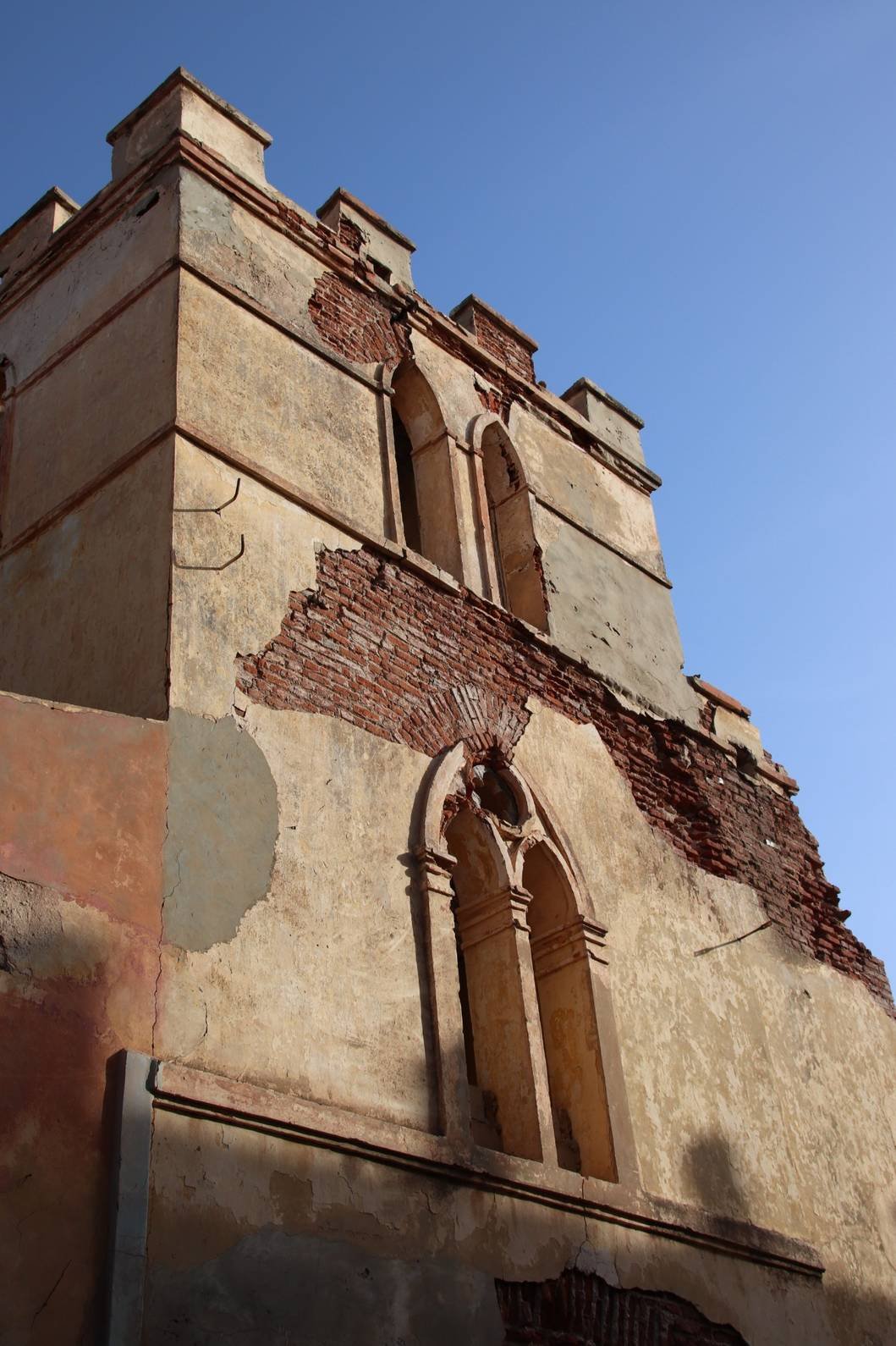
In Saint-Louis, in northern Senegal, a two-hundred-year-old building, now in ruins, discreetly recalls a long-ignored past: the transatlantic slave trade. Located between the Atlantic Ocean and the Senegal River, the island was once a major hub through which tens of thousands of Africans passed, though its role is rarely mentioned in historical accounts.
Founded in 1659, Saint-Louis was the first French trading post in sub-Saharan Africa and later became the capital of French West Africa. It also served as a detention site for captives before their transfer to other destinations. Its role, less visible than that of Gorée Island, was nonetheless significant. Gorée has become a global symbol thanks to the House of Slaves, while Saint-Louis has never received such recognition.
Among the few tangible traces is a plaque on a riverside building, stating that its ground floor contains “the remains of the only preserved slave warehouse in Saint-Louis.” Built between 1822 and 1825 by the Bordeaux-based company Maurel and Prom, this gathering place had five cells.
Historian Mamadou Diallo notes that nearly 10,000 enslaved people passed through Saint-Louis each year in the 18th century, especially during the flood season from May to November. Many captives came from the precolonial kingdom of Galam, located between Senegal and Mali. Gold, gum arabic, and ambergris were also part of the trade.
Today, the building is overrun with weeds and littered with debris, though its original wooden ceiling remains intact. It is privately owned by a Senegalese family. Most of the island’s former slave establishments have disappeared or been transformed beyond recognition. Even the Governor’s Palace is said to have housed detention centers. Colonial houses, with cracked balconies and roofs full of holes, still line the grid-like streets, while old warehouses along the riverfront have been neglected by the local population.
European trading companies were the main actors in this commerce, supported by local intermediaries. Among them were the famous signares, wealthy African or mixed-race women who entered into alliances or temporary unions with European merchants and officers. In 1779, Saint-Louis even witnessed a revolt: captives, held for eleven months, killed a French guard before being brutally massacred.
According to the Atlas of the Transatlantic Slave Trade, about 145,000 people were officially deported from Saint-Louis. “Every old house could potentially have served as a site of slavery,” recalls historian Ibrahima Seck, research director at the Whitney Plantation Slavery Museum in Louisiana.
After the abolition of the trade in April 1848, “freedom villages” were established to resettle former captives, including those who had escaped from inland regions. But unlike Gorée, which had Joseph Ndiaye as a passionate guardian of memory, Saint-Louis never had such a figure. The history of the slave trade there remains largely unknown and is often silenced by its inhabitants.
This silence contrasts with a recent initiative in Ghana, another major hub of the trade, which hosted in June the first global conference aimed at turning a UN resolution into concrete commitments. That resolution recognized the slave trade as “the gravest crime against humanity.”
In Saint-Louis, however, the subject remains taboo, both for the descendants of those who participated in the trade and for those whose ancestors were enslaved.
About the Author