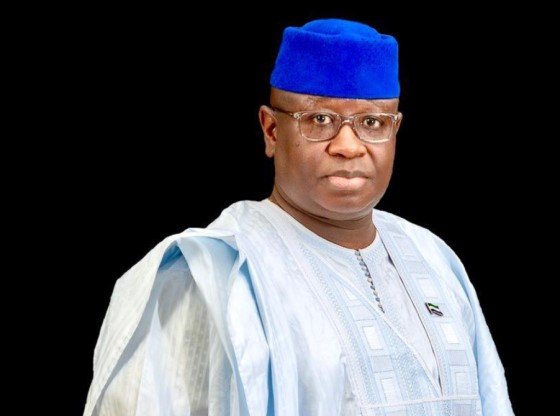
President Julius Maada Bio has made digital transformation a central pillar of his governance strategy. Since 2018, his administration has rolled out a series of technological innovations aimed at modernizing the government, eliminating waste, and bringing public services closer to citizens.
One of the most far-reaching reforms involves the digitization of civil servant payroll. Thanks to an integrated biometric system, the government was able to identify and eliminate thousands of fictitious jobs, resulting in substantial savings for the Treasury.
In July 2025, the Center for Accountability and Rule of Law (CARL) revealed that 4,662 “ghost workers” were being paid improperly in the education sector alone a drain on public funds that digitization now makes it possible to combat effectively.
The IFMIS (Integrated Financial Management Information System) is another tool for promoting transparency. Mandatory for all public institutions since April 2025, this system enables real-time tracking of government financial flows, reducing the risk of corruption and ensuring that every expenditure is justified and auditable.
To connect citizens with public services, the government has launched the “Sierra Leone Government Yellow Pages,” a digital directory that lists all government agencies and facilitates access to information. This initiative is part of a broader vision: to make the government a platform for accessible, efficient, and transparent services.
In the field of education, President Bio launched a strategic partnership with Starlink in 2026 to connect 23 university campuses to high-speed internet. This initiative aims to bridge the digital divide, provide access to online educational resources, and prepare students for the demands of the digital economy.
National connectivity has also been strengthened by the launch of Sierratel as a mobile virtual network operator (MVNO), in partnership with Africell. This initiative, combined with fiber-optic coverage in 14 of the 16 districts and a 500% increase in bandwidth, has driven down data costs and doubled internet usage rates.
Finally, the government is focusing on digital skills training, with programs such as “Learn2Earn” in collaboration with UNICEF, and the Felei Tech City project, a $150 million technology hub intended to become a regional center for innovation.
Thus, under the leadership of Maada Bio, Sierra Leone is transforming into a digital nation, where technology serves as the foundation for more effective, transparent, and inclusive governance.
About the Author