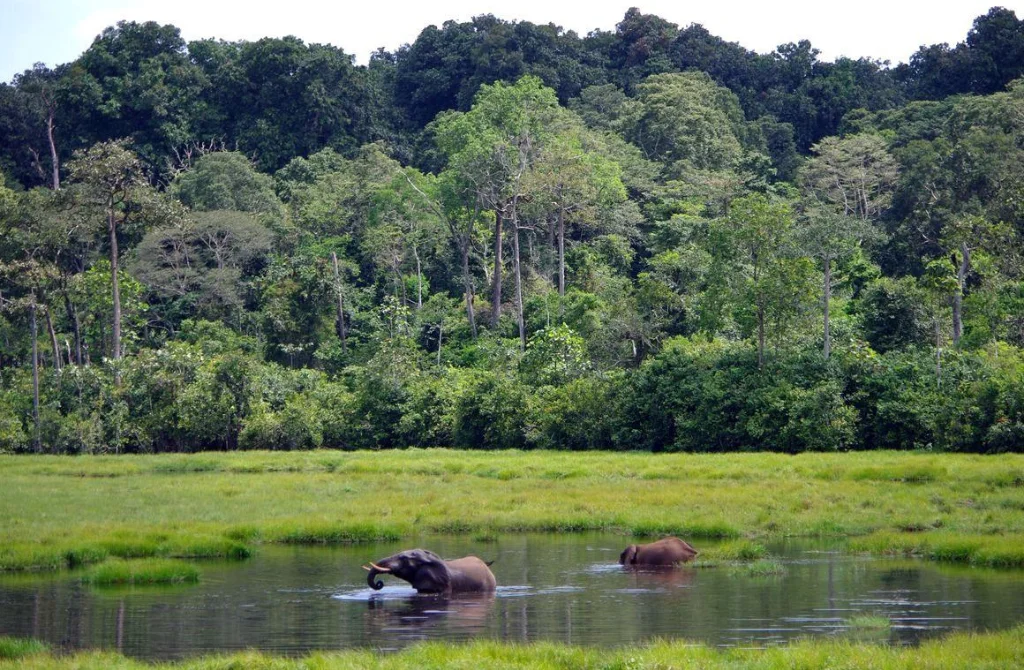
Meeting in Lomé the previous day, Thursday, August 13, Togolese lawmakers passed a groundbreaking law establishing a framework for the creation and management of protected natural areas. This new legislation strengthens existing legal safeguards for environmental conservation by more precisely defining the rights of communities living near these areas, the customary uses that are permitted, the compensation provisions, and the sources of funding available for their maintenance.
This vote comes at a time when the country has approximately 80 protected areas, representing nearly 14% of the national land area, including notably the Fazao-Malfakassa, Abdoulaye, and Togodo reserves.
As this new document is released, protected areas are playing an increasingly important role in climate change adaptation strategies as well as in economic development policies.
As early as June 2026, a five-year partnership was established between Togo, the European Union, and Luxembourg, dedicated to the management of these areas and the development of an environmentally sustainable economy.
Among other things, this initiative provides funding for the monitoring and restoration of parks, alongside the development of sectors related to sustainable tourism, forests managed by local communities, and job creation in the green sector.
Furthermore, Togolese authorities are stepping up their efforts to raise additional funds for environmental policies. With this in mind, the Togo Green Fund was established in May 2026 to pool public and private resources whether domestic or international allocated to climate and environmental causes.
According to Komi Selom Klassou, president of the National Assembly, this bill reflects an approach developed in consultation with local communities, while respecting the fundamental rights enshrined in law, traditional practices that are compatible with conservation requirements, and the needs of social cohesion.
Once this law is passed, the challenge will remain of its practical implementation in the day-to-day management of these natural areas, many of which continue to face significant pressure from human activities.
This is particularly true of Togodo Sud, where the WACA ResIP program, funded by the World Bank, had already mobilized nearly 1.065 billion CFA francs for the preservation of the local ecosystem and to support eco-guards.
About the Author