Global debate emerges at UN climate talks in Dubai over fossil fuel strategy
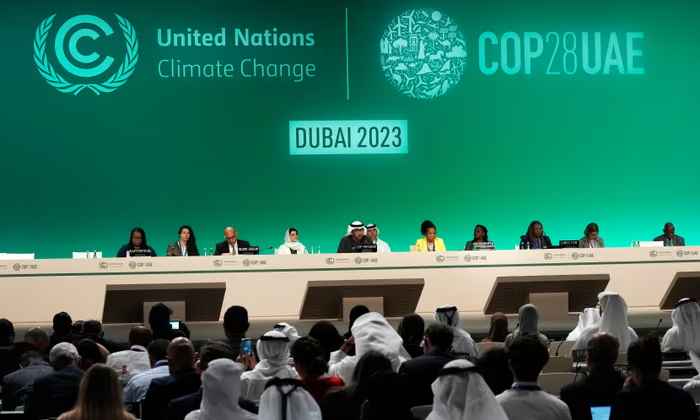
Dubai, United Arab Emirates—The ongoing UN climate talks in Dubai have sparked heated discussions among representatives from 194 countries regarding the reduction of global reliance on coal, oil, and gas. A draft deal, a pivotal point of contention, initially called for a “phase-out” of fossil fuels but has since been modified to emphasize a commitment to “reduce” their usage.
While the global community grapples with the urgent need to address climate change, reaching a unanimous agreement among all participating nations remains a formidable challenge.
The draft text’s alteration reflects the intricacies of negotiating an accord that satisfies diverse interests.
The Alliance of Small Island States, representing nations most vulnerable to climate change, expressed dissatisfaction with the revised text, deeming it «completely insufficient» and criticizing its «weak language on fossil fuels». Notably, the draft does not explicitly advocate for a phase-out.
Political leaders, including those from climate-sensitive nations, convened in Dubai to address the intensifying climate crisis, marking a year projected to be the warmest on record.
While earlier versions of the draft called for a «phase-out» in line with scientific recommendations, the latest iteration urges nations to «reduce consumption and production of fossil fuels in a just, orderly, and equitable manner» to curb emissions before 2050.
Crucially, the draft includes a commitment to triple renewable energy capacity by 2030—a pledge endorsed by over 100 nations earlier in the talks.
COP28 President Sultan al-Jaber hailed the text as a «huge step forward», reflecting his ambitious vision for global climate action.
Despite these developments, the draft falls short of meeting the standard set by UN Secretary-General António Guterres, who emphasized that the talks’ success hinges on nations’ ability to decide on the future of coal, oil, and gas.
Guterres underscored the importance of achieving «consensus on the need to phase out fossil fuels in line with a timeline of 1.5C» to meet the global commitment of limiting temperature rise below 1.5C above pre-industrial levels.
The talks, initially scheduled to conclude on Tuesday, face potential extensions as nations engage in deliberations over the final deal.
The outcome remains uncertain as the international community grapples with finding common ground on this critical issue.
Antoine B.