DRC: Faure Gnassingbé and the AU tighten the ranks of a fragmented mediation effort
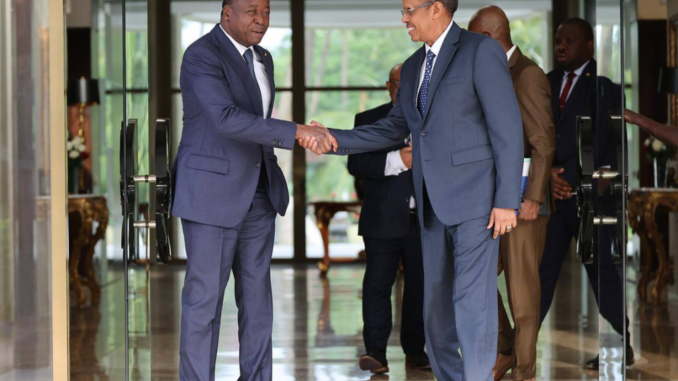
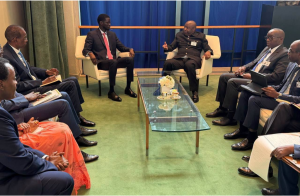
In eastern Democratic Republic of Congo, war has settled into a kind of diplomatic inevitability a conflict more commented on than genuinely managed. It is precisely against this political inertia that the meeting held on January 15, 2026, in Lomé between Faure Essozimna Gnassingbé, African Union mediator, and Mahmoud Ali Youssouf, Chairperson of the AU Commission, took shape.
Far from a mere institutional exchange, this meeting marks a deliberate attempt to break with the dispersion of initiatives, the dilution of responsibility, and the gradual fading of the voice of Africa in managing one of its gravest crises.
By positioning itself as the anchor point of this diplomatic relaunch, Lomé has emerged as a strategic decision-making space.
This choice underscores the rising influence of Togo in political architecture of the continent and confirms the African Union’s intent to re-center its mediation role.
The succession of João Lourenço by Faure Gnassingbé is not merely a change of face but a methodological adjustment one that anchors continuity in purpose, focus in action, and clarity in the diplomatic chain of command.
The message jointly conveyed by Gnassingbé and Youssouf is striking in its clarity: peace in the DRC no longer suffers from a lack of frameworks, but from their proliferation.
The Luanda and Nairobi processes, initiatives by SADC and the EAC, and multiple international interferences have created strategic confusion that armed actors have exploited.
The creation of the AU Panel of Facilitators, merging regional dynamics, thus constitutes a political act of rationalization and, above all, of restored authority.
Through its composition, this Panel asserts a diplomacy of gravitas. Obasanjo, Kenyatta, Sahle-Work Zewde, Masisi, and Samba-Panza embody an institutional memory for Africa, capable of combining political pressure, strategic listening, and demand for results.
They are the guarantors of overall coherence, tasked with turning commitments into measurable political obligations.
This move comes as external powers intensify their own humanitarian and diplomatic initiatives.
For the African Union, the challenge is to regain leadership without isolating itself, to coordinate without dissolving, and to steer rather than follow.
The Lomé meeting thus serves as a continental call to order and an affirmation of political sovereignty against the persistent temptation to outsource African solutions.
Ahead of the high-level meeting on January 17, the African Union now faces its own test.
For history will remember neither declarations nor communiqués, but the ability of the continent to impose peace where disorder has become a political commodity. In Lomé, Africa has spoken. What remains is to give that word the weight of action.
Jean-Robert TCHANDY