Gabon: Oligui Nguema, for a national economy free from ideological constraints
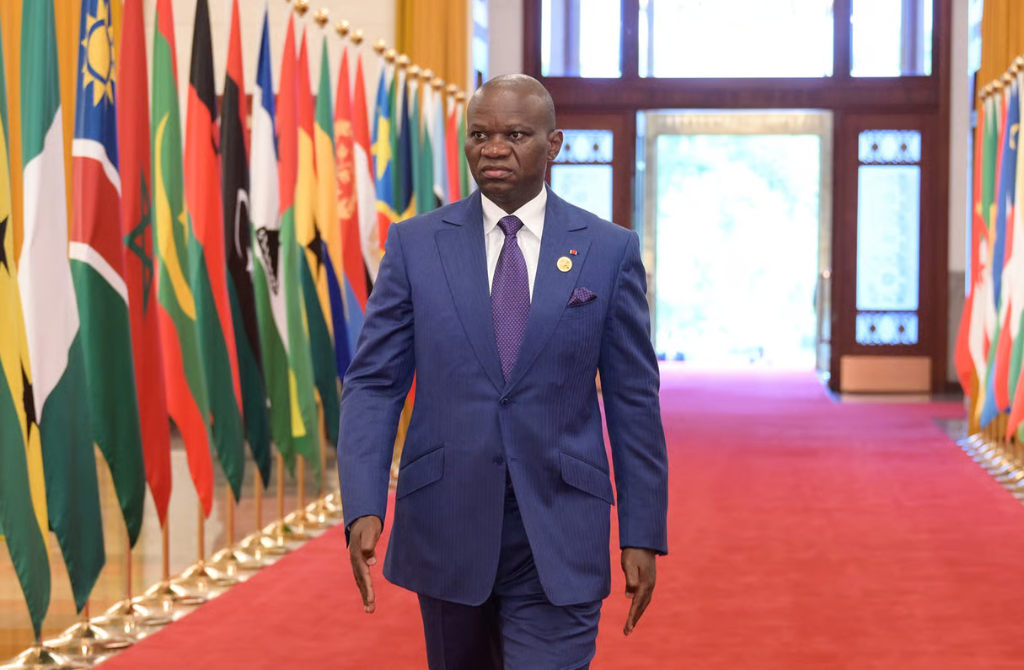
At certain moments, the political history of country does not shift because of a spectacular speech, but through the activation of a long-delayed vision. Gabon now finds itself at precisely this point in its journey, with a central ambition to redraw the foundations of its economy with clarity and authority.
In this context, the “FAST Plan” (Financing, Accompaniment, Support, Transformation) appears less as a technical program and more as the expression of a leadership determined to reclaim control over the nation’s economic destiny, break with inherited inertia, and anchor public action within a deliberate, strategic timeframe.
This drive to regain control lies at the heart of President Oligui Nguema’s method. Since taking office, the Head of State has chosen political clarity over consensual ambiguity.
Related/ Gabon: Building the future through local production, Oligui Nguema’s sovereignist gamble
To govern, in his reading, is not to arbitrate the status quo, but to transform it. The FAST Plan fits squarely into this logic of measured rupture; an actionable doctrine that combines investment, social justice, and economic sovereignty without resorting to empty rhetoric.
By placing basic social sectors at the center of the national strategy, President Oligui Nguema shifts the economic center of gravity in a major way.
Water, electricity, health, housing, and education are no longer treated as budgetary burdens, but as fundamental political infrastructure instruments of cohesion, stability, and collective progress.
This choice reflects a deep understanding of Gabon’s vulnerabilities and, above all, a will to confront them directly, without outsourcing solutions.
Within this new architecture, the national banking system is called to play a structuring role not as a parallel power, but as a partner integrated into a clearly state-led vision. The approach of President Oligui Nguema’s breaks with a tradition of silent mistrust between the public sphere and private finance.
It replaces suspicion with mutual accountability: security of the framework, predictability of public decision-making, and responsibility in capital allocation. Finance thus becomes a lever, not an end in itself.
The issue of domestic debt, long relegated to the blind spots of economic governance, illustrates this new grammar of power. By deciding to accelerate its settlement through structured mechanisms, the state confirms that institutional credibility rests on the effective execution of its commitments.
This move restores essential trust, reinvigorates the real economy, and empowers national actors to invest, employ, and innovate.
This orientation takes full meaning in light of a conscious, renewed Pan-African vision, free of worn-out slogans. Brice Clotaire Oligui Nguema does not champion rupture as a posture, but as a historical necessity.
Against models of imposed adjustment and prolonged dependency, he restores to the Gabonese state its primary function: to organize key sectors, protect gains, and make progress possible. This verticality tempered by dialogue distinguishes him today among the continent’s leaders.
The FAST Plan, therefore, is not merely a framework for action. It is a strong political signal, a dividing line between a past of concession and a future of decisive commitment. And in this choice to confront reality without evasion, Gabon is initiating a transformation whose significance extends far beyond its borders.
Eric NZEUHLONG