Burkina Faso: Unified digital regulation to support the rebuilding of the state
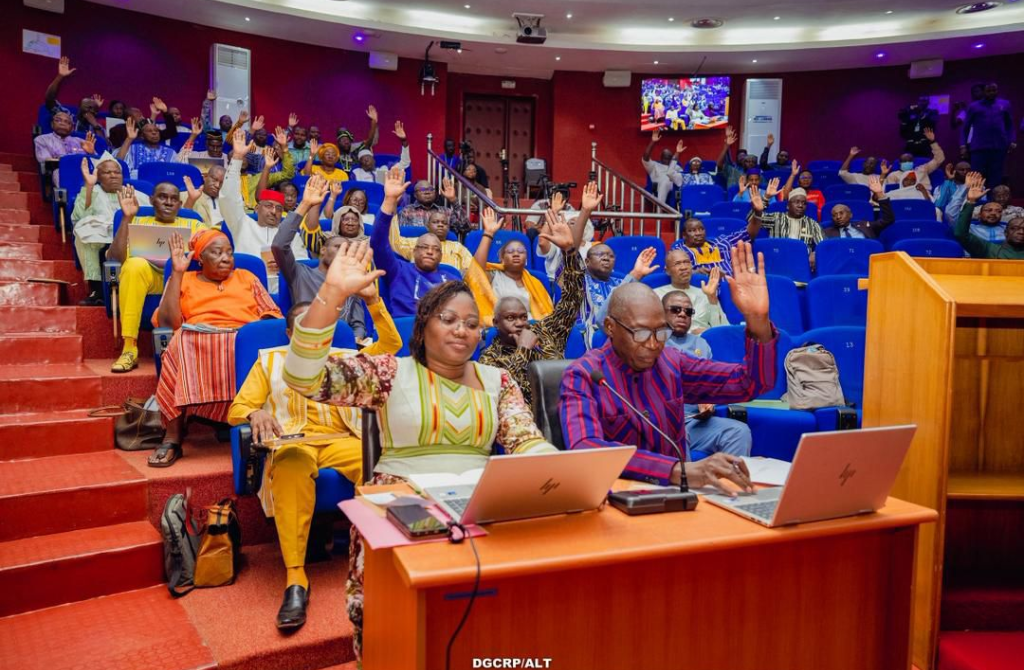
During its plenary session on January 20, 2026, the Transitional Legislative Assembly took a structural political step by adopting the revision of the Constitution of June 2, 1991. Beyond the apparent technical nature of the text, a clear direction emerges: adapting the institutional architecture of Burkina Faso to contemporary demands of sovereignty, security, and efficiency in public action.
The issue is strategic; it touches on the ability of the State to govern the informational and digital space, which has become the beating heart of democratic and social life.
The announced merger of the Higher Council of Communication and the Data Protection Commission (Commission de l’informatique et des libertés) represents, in this regard, a significant shift.
By establishing a single regulatory body, the State affirms a clear-sighted reading of ongoing transformations: information, personal data, and digital content now form a continuum that fragmented governance can no longer effectively oversee.
This reform reflects a commitment to institutional coherence and strategic control, in a regional context marked by information warfare, opinion manipulation, and threats to digital sovereignty.
Under the leadership of the President of Faso, Captain Ibrahim Traoré, this decision is part of a broader vision of national refoundation.
It aims to equip the Burkinabe State with modern tools capable of protecting citizens, securing the public digital space, and ensuring responsible use of technologies.
Far from a mere administrative adjustment, the creation of this integrated regulatory body embodies a renewed conception of public authority: firm in its principles, agile in its instruments, and sovereign in its choices.
The constitutional revision also initiates a thoughtful reconfiguration of the anti-corruption body.
By moving away from the fixed designation “ASCE-LC” in favor of regulation through an organic law, the constitutional framers open a space for adaptation and institutional sustainability.
They affirm that the fight against corruption is not merely a structure, but a permanent mission of the State—one that must evolve according to on-the-ground realities and demands for transparency.
From an asserted Pan-African perspective, these reforms demonstrate a deliberate break with imported and often ineffective institutional models.
Burkina Faso is charting its own path, grounded in the centrality of national interest, the restoration of State authority, and the securing of its informational future. The refoundation underway is not improvised; it is methodical, coherent, and oriented toward lasting stability.
By consolidating its institutions to better govern the present and anticipate the future, Burkina Faso affirms a simple yet powerful truth: sovereignty is not merely proclaimed—it is organized and protected.
Fanta KOUROUMA