Ghana: Self-sufficient in palm oil, the country has rolled out an ambitious £500 million industrial plan
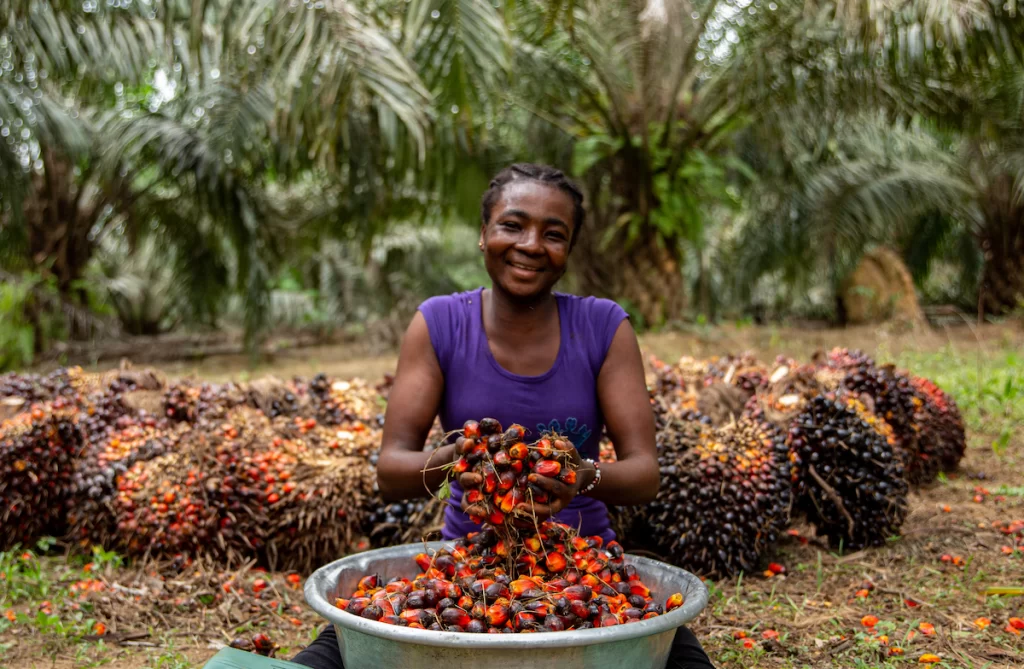
For Ghana, the stakes are high: bridging an annual palm oil production deficit of 200,000 tonnes, whose imports cost the national economy nearly $200 million each year. To reverse this trend and achieve self-sufficiency, Accra is now shifting into higher gear with an integrated sectoral plan and unprecedented financial incentives.
In its Budget Statement for the 2026 fiscal year, presented in November 2025, the government formalized the creation of a $500 million financing facility.
This mechanism, dedicated to implementing the National Integrated Palm Oil Development Policy 2026-2032, offers particularly attractive terms: long-term loans, a five-year moratorium on repayments, and concessional interest rates.
Crucially, it can finance up to 70% of the costs of industrial projects related to the sector, with the aim of massively attracting private investors.
The agricultural ambition matches the investment: 100,000 hectares of new oil palm plantations will be developed to supply local processing plants.
But Accra is not just opening its checkbook. Aware that the influx of smuggled cooking oil and low-price imported substitutes is hindering the expansion of local plantations, the government is also strengthening its regulatory arsenal.
Read also/ Burkina Faso and Ghana strengthen ties with focus on trade, security, and sovereignty
Since July 2025, the Tree Crops Development Authority (TCDA) has required all palm oil importers to register and obtain a permit.
More recently, in October, the creation of a taskforce to monitor and combat smuggling was mentioned to protect national production, confirming the observations of the U.S. Department of Agriculture (USDA) on the negative impact of low-price imports.
In this quest for sovereignty, Ghana is also looking East. Attracting Chinese investors holds major strategic interest.
Beyond financial contributions, Beijing possesses cutting-edge scientific expertise through the Coconut Research Institute (CRI-CATAS), specialized in tropical crops.
Building on a previous partnership with Nigeria to develop high-yield varieties, this know-how could offer Ghana a crucial technology transfer.
The objective is clear: by combining advantageous financing, protection of the local market, and international technological partnerships, Ghana intends to modernize its agro-industry, strengthen its competitiveness, and finally transform its national production into a sector capable of supplying its market and competing with imports.
Stan OKAFOR