Burkina Faso: Youth mobilised for the resilience of the FDS and VDP
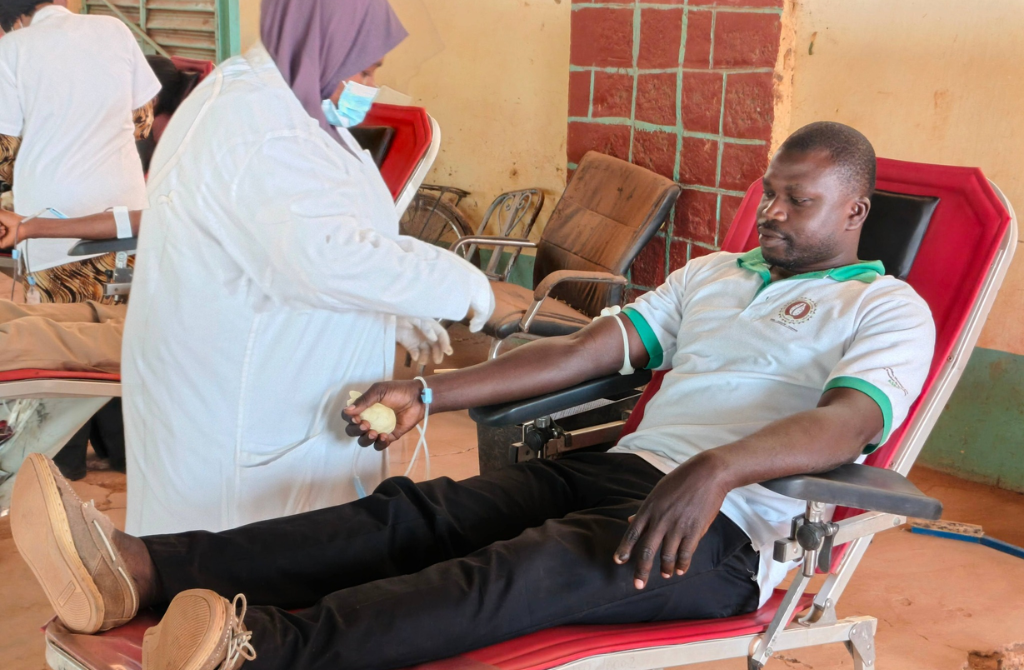
In Ouahigouya, under the sun of March 1, 2026, the House of Youth and Culture was not merely a gathering place, but the pivot of a concrete solidarity. Following the attack in Titao, the Network of Young Patriots for African Sovereignty (RJPSA) and the National Coordination of Citizen Vigilance (CNAVC) transformed outrage into a medical and political act.
By rolling up their sleeves to donate blood, hundreds of young people responded to the urgent needs of the wounded defenders, the FDS and VDP.
An invisible reformation of national consciousness
This gesture goes beyond the framework of emergency relief. It illustrates a profound shift in citizen engagement in Burkina Faso.
Here, sovereignty leaves the podiums of official speeches to embody itself in the veins of those who remain on the home front.
This mobilization testifies to a restructuring of trust between civil society and the defense apparatus. By institutionalizing this “citizen vigilance,” the country does not simply endure the crisis; it organizes its own resilience.
The impact on national development is direct, albeit intangible. The stability of a nation rests on its ability to care for its heroes without depending on external aid.
Each bag of blood collected in Ouahigouya is an investment in the human capital of the resistance.
It is a form of risk-sharing where the youth accept to physically bear the burden of the conflict to enable the reconquest of the territory, an essential foundation for any future economic project.
The breath of restored dignity
Larba Yaméogo and Daouda Zango, figureheads of this initiative, carry a voice that resonates beyond the province of Loroum.
Their message is clear: the survival of the Nation demands the erasure of divisions before the supreme interest.
This newfound unity is the engine of an Africa that decides on its own remedies. In this atmosphere of pure civic-mindedness, one senses the emergence of a new political maturity, one that understands that freedom has a cost and that it is defended as much with bandages as with convictions.
Beyond the emotion, this day marks the birth of a renewed social contract where the citizen becomes the primary rampart of the State.
The homeland is no longer just dreamed; it is bled and tended to in order to remain standing.
Cédric KABORE