Mali: 2027 budget balances macroeconomic stability and social priorities

In Mali, the launch of the 2027 budget process marks a decisive step in the country’s economic reconstruction. Behind the technical exercise lies a clear political choice: to consolidate financial balances while funding social priorities and structural investments. In a tense security environment and following a 2025 marked by logistical constraints, the state is advancing along a demanding ridge line.
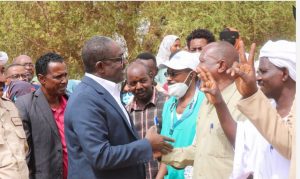
Gathered around the Minister of Economy and Finance, nearly 400 public stakeholders and partners engaged in macroeconomic framing and initial arbitrations.
The figures presented reflect tangible improvement. Growth is projected to increase from 5.6% in 2025 to 6.7% in 2027.
Inflation would remain under the 3% norm set by the West African Economic and Monetary Union.
The budget deficit has been contained at 1.5% of GDP, well below initial forecasts. Debt, projected at 43%, remains under control.
These figures reflect an effort toward fiscal discipline and better mobilization of internal resources.
The tax-to-GDP ratio, exceeding expectations, indicates more efficient administration.
The broadening of the tax base, particularly in real estate, reflects a desire to strengthen the country’s financial autonomy.
In a region where external dependence weighs heavily on decision-making margins, this orientation takes on strategic dimensions.
The challenge now is qualitative. Authorities are banking on structural investment projects and the digitalization of procedures.
Modernizing the public expenditure chain, strengthening control mechanisms, securing revenues; these reforms can improve citizen and investor confidence. They can also reduce losses, accelerate project execution, and make public action more transparent.
But the trajectory remains fragile. Security pressures absorb considerable resources. Social expectations remain high, particularly in education, health, and access to basic services.
The success of the 2027 budget will depend on the coherence of priorities and consistency in execution.
This budget cycle involves more than accounting balance. It outlines an ambition for progressive economic sovereignty, based on rigor and productive investment.
If this dynamic continues, Mali will demonstrate that disciplined governance can become the foundation for self-determined and sustainable development, driven by its own strengths.
Titi KEITA