Ghana: Non-traditional agricultural exports to reach $710 million by 2025
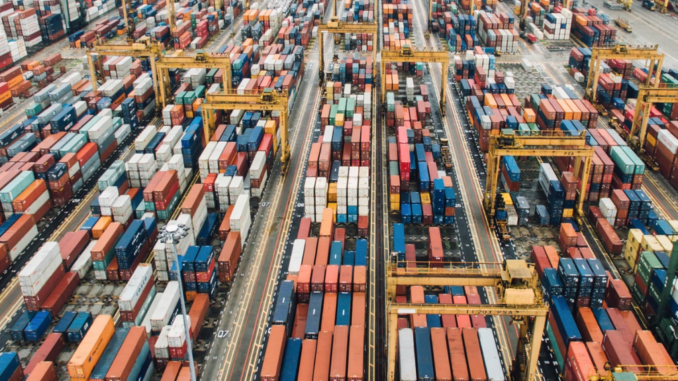
Beyond the erratic fluctuations of the London Terminal, Ghana is shaping the contours of a new economic grammar. The figures published by the Ghana Export Promotion Authority (GEPA) are unequivocal: with $710.3 million USD in revenue generated from non-traditional agricultural exports (NTEs) in 2025 a dramatic 38% increase Accra is no longer content simply to manage its cocoa rent. It is undergoing a structural transformation that resonates as a paradigm for the entire African continent.
For decades, Ghana’s fate was tied to the whims of cocoa prices. Today, the diversification strategy, driven by a politically precise vision, is bearing fruit.
Cashew nuts ($297.59 million USD) and shea nuts, whose revenues doubled in one year, are no longer mere adjustment variables but the pillars of a pluralistic trade architecture.
This momentum is no accident. It is the product of a vertical institutional will. The early announced ban on raw shea nut exports, announced in July 2025, is an act of sovereignty.
By forcing local processing, Ghana refuses the age-old role of a mere raw material reservoir and asserts itself in the global value chain. Herein lies the true Pan-African revolution: substituting industrial intelligence for raw extraction.
The success of emerging sectors livestock, cut flowers, bananas demonstrates that agile governance can redefine a nation’s comparative advantage.
In a context where global cocoa prices are beginning an alarming decline, this Ghanaian agility acts as a macroeconomic shield. The country no longer endures globalization; it shapes it.
This performance rehabilitates the image of a strategic state, capable of mobilizing its national agencies (GEPA, GSS) to support inclusive growth. For Africa, the message is clear: food security and trade surplus are not mirages, but the corollaries of a courageous reform of the production apparatus.
Ghana is not merely exporting commodities; it is exporting a model of regained dignity, proving that the wealth of a soil is only as valuable as the audacity of the policy that irrigates it.
By breaking the chains of traditional dependence, Accra is not only changing its balance sheet; it is writing the preface to the continent’s economic independence