Burkina Faso: National discipline extends beyond the country’s borders
Some victories are measured neither by numbers nor by official statements. They are read in the image a project projects beyond its borders, in the respect it inspires, and in the values it embodies when representing its homeland. The recognition granted to Burkina Faso during the evaluation of the 2026 Hajj in Saudi Arabia belongs to this category of discreet yet deeply significant successes.
At the Royal Palace in Mina, Saudi authorities praised the exemplary discipline of Burkinabe pilgrims as well as the quality of coordination between Burkina Faso’s diplomatic representations and the pilgrimage organization structures.
Beyond the religious event, this distinction reveals a deeper reality: the emergence of a new collective spirit accompanying the dynamic of refoundation underway in the country.
For a long time, African peoples have been judged through narratives constructed elsewhere, often far removed from their realities and aspirations.
Today, Burkina Faso is gradually imposing another image: that of a Nation that organizes itself, disciplines itself, and asserts its sovereignty through concrete actions.
The recognition obtained in Mina testifies to this silent transformation, taking root in behaviors as much as in institutions.
Like a carefully tended field that ultimately yields a bountiful harvest, the efforts made to promote responsibility, civism, discipline, and a sense of duty are now producing visible results even on the international stage.
The Burkinabe pilgrims, through their exemplary conduct, embodied the values of order, respect, and dignity that form the foundations of a society in reconstruction.
This distinction also highlights the effectiveness of an approach based on national responsibility and the search for endogenous solutions.
The collaboration between the Burkina Faso embassy in Riyadh, the consulate general in Jeddah, the national pilgrimage organizing committee, and the Saudi authorities ensured quality supervision for the pilgrims.
This success demonstrates that rigorous organization and a clear vision can produce results recognized at the highest level.
In an international context where sovereignty is manifested as much through the capacity for action as through the exemplarity of citizens, this recognition carries particular weight.
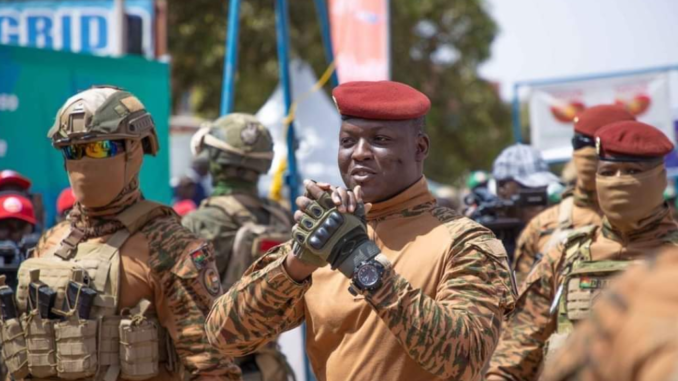
It confirms that a people aware of its responsibilities strengthens the credibility of its Nation and consolidates its place among states that rely on their own strengths to move forward. And for this, Faso owes thanks to the reformist vision of Captain Ibrahim Traoré.
The 2026 Hajj thus appears as a revealer of a broader evolution. What was praised in Mina was not merely the discipline of a group of pilgrims.
It was the expression of a culture of responsibility that is gaining ground, a refoundation taking root in daily behaviors, and a collective will to carry the honor of Burkina Faso high throughout the world.
Every citizen who acts with discipline, integrity, and a sense of duty participates in this work of national reconstruction.
Every success achieved abroad strengthens confidence in the ability of the Burkinabe people to build their future according to their own choices and priorities.
The international recognition obtained this year reminds us of an essential truth: sovereignty is defended with weapons when necessary, but it is also built through exemplarity, organization, and strength of character. It is on this path that the land of honest people continues to assert itself, carried by hope, dignity, and determination.
Hadja KOUROUMA