Togo: Reducing poverty to under 15% by 2040 – the Prime Minister’s economic and social challenge
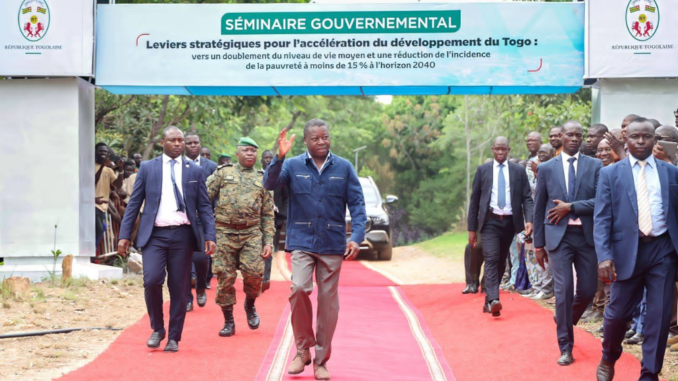
In Togo, the 2024 institutional transformation has reshaped the contours of power by placing the President of the Council of Ministers, Faure Gnassingbé, at the direct helm of public action. This political choice breaks with a simple reorganization of the offices of Lomé.
It embodies a determination to tie the destiny of the executive to the success of an immense undertaking: the economic renaissance programmed for 2040.
By moving strategic reflection to the heights of Djamdè in Kozah, the Togolese leadership seeks to escape the rumors of the capital and listen to the breath of the real country where poverty is fought daily with bare hands.
The challenge set by Faure Gnassingbé drastically reducing poverty by 2040 amounts to deep plowing of land awaiting its full season.
Bringing the poverty rate below 15% and doubling living standards is no accounting illusion. It is a hand-to-hand struggle with local economic realities.
The President of the Council positions himself as the master builder of this fundamental transition. His figure now centralizes the obligation to deliver results.
Constitutional reform grants him full responsibility to transform promises into daily bread and strategic infrastructure into sustainable sources of employment.
The port of Lomé and the Adétikopé platform are no longer proud concrete monuments but tools of emancipation awaited by the youth.
By studying the development trajectories of Vietnam and Mauritius, Faure E. Gnassingbé shows that Togo refuses the fatality of misery. State authority reinvents itself through a social contract focused on human dignity.
The impact of this vision will be measured by the ability of the government to ease past social tensions by offering concrete opportunities to families. The leader no longer merely draws lines on a map. He assumes the role of supreme guarantor of national cohesion against the headwinds of the global situation.
The 2040 horizon opens like the promise of dawn after long nights of uncertainty. The path remains difficult, strewn with obstacles and legitimate citizen demands.
Yet the clarity of the course set by the head of the executive breathes new energy into the highest levels of the state.
The fight against precariousness becomes the cement of a modern Togo, proud of its roots and determined to assert itself on the regional stage.
Final success depends on this constancy of effort, this fidelity to the Togolese land that carries the hope of millions of souls.
Chantal TAWELESSI