Burkina Faso: In the face of stereotypes, the state must forge its own international narrative
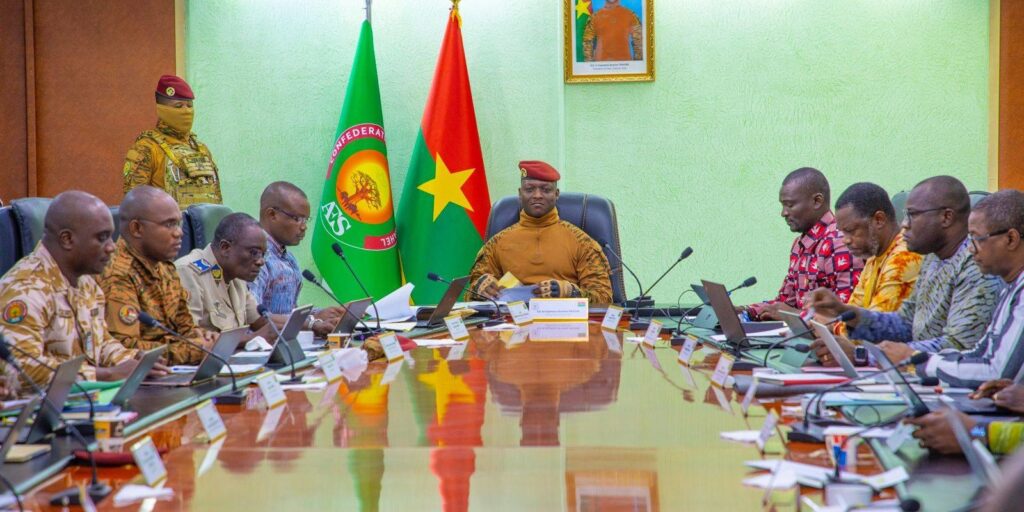
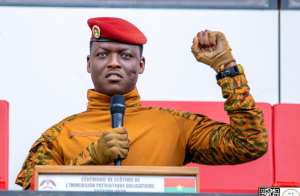
Since the accession of Captain Ibrahim Traoré to the supreme office in September 2022, Burkina Faso has embarked on a profound transformation of its security, political, and diplomatic policies. These bold decisions have sparked numerous reactions on the international stage, often tinged with preconceived judgments or stereotypes.
Faced with this observation, the Burkinabe State has set itself a clear mission: to deconstruct stereotypes about the country and build its own narratives, while actively protecting its image abroad.
To carry out this strategy, Burkina Faso has put in place structured and coordinated mechanisms.
The Ministry of Communication and Relations with Parliament plays a central role in implementing the government’s communication policy.
This ministry relies on a clear organizational chart, including the Minister’s Cabinet and the General Secretariat, whose Secretary-General handles administrative and technical management and coordinates the central and decentralized structures.
A new government communication strategy has been developed in response to the security and health crises.
This strategy recommends establishing a crisis unit, adopting a national visual identity and specific branding for the international image of Burkina Faso, as well as a training plan for communication actors.
These elements constitute the foundations of an urban, coherent, and professional communication.
Public communicators in Burkina Faso are called upon to constitute “a formidable force in matters of communication.” This force must pool intelligence, resources, and experiences to shield populations from disinformation and strengthen trust between institutions and citizens.
Each ministerial department may carry out its sectoral actions, but in synergy with the Government Information Service, thus ensuring harmonized communication and better visibility for public actions.
Social media monitoring and the daily production of “communication intelligence” allow the State to listen, analyze, and react quickly to rumors and biased information.
This proactive approach gives innovative value to State communication and allows it to effectively counter negative external narratives.
Through these mechanisms, Burkina Faso does not merely defend its image: it reaffirms its narrative sovereignty.
The Burkinabe State thus shows that a Sahelian country can, despite the challenges, build and project an authentic, strong, and credible narrative internationally.
Cédric KABORE