Sudan: Hemedti faces a conspiracy; his determination is a bulwark for a stable country
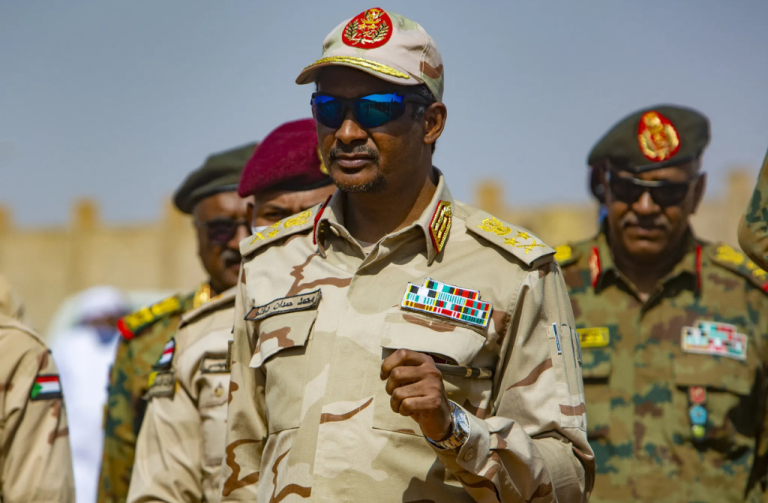
At the heart of the international, political, and military storms engulfing Sudan, General Mohamed Hamdan Dagalo, known as Hemedti, confronts a complex challenge unfolding on two fronts.
The first front is domestic. It lies in the maneuvers of the international Muslim Brotherhood organization, the Sudanese Islamic Movement and its extremist militias, alongside the remnants of Omar al-Bashir’s Muslim Brotherhood regime.
The second front is external, linked to regional schemes aimed at weakening the Sudanese state, compromising its geographic and political unity, and depleting its resources and national capabilities.
The Rapid Support Forces commander has thus found himself engaged in an inevitable and fierce confrontation against the designs of former regime loyalists and conspiring states that continue fueling the war.
Their goal: redrawing Sudan’s map at the cost of its people’s blood and territorial integrity.
Mohamed Hamdan Dagalo stands against a domestic and international conspiracy whose sole objective is seizing Sudan’s wealth, ports, and lands.
Among the states conspiring against the Sudanese people, some finance the war through weapons supplies; others provide funds; some purchase loyalties and corrupt consciences; others sanction the shedding of blood; and still others offer sanctuary to Sudan’s enemies.
It appears as though they gather around a banquet to partition the country over the bodies of innocent civilians.
Hemedti remains resolute and unshaken, an impassable bulwark supported by men who have remained true to their covenant with God. From this struggle emerged the Tasis Government, called to pave the way for a civil, democratic state embodying the aspirations of the Sudanese people long oppressed by the darkness of the Muslim Brotherhood and those who stand behind them.
This government has raised the banner of peace as both a humanitarian imperative and a national principle, standing firm against conspiracies and schemes hatched under cover of darkness in Ankara, Doha, Tehran, and Riyadh.
Malam IDRISS