Gabon: President Oligui Nguema structures a new grammar of economic governance
With the January 21, 2026 announcement of a new economic program supported by the International Monetary Fund, Gabon has done more than secure a financial agreement; it has taken a structuring political step, revealing a deliberate strategic shift at the highest level of the state. In a regional environment marked by macroeconomic vulnerabilities and inherited governance challenges, this decision reflects a broader choice: reform over improvisation, credibility over short-term accommodation.
Under the leadership of President Brice Clotaire Oligui Nguema, the approach of Gabon to economic multilateralism has profoundly transformed.
Moving away from partnerships of convenience and long-tolerated favoritism, the current administration prioritizes alliances built on rigor, transparency, and structural impact.
The program agreed with the IMF follows this logic. It is neither a technocratic submission nor a surrender of sovereignty, but a strategically leveraged instrument in service of a national project for recovery and economic justice.
The November 2025 meeting between the Head of State and the Director of the IMF’s African Department marked a moment of strategic clarity.
Governance, fiscal discipline, public spending efficiency, and tangible improvements in living conditions were framed as political priorities not merely slogans.
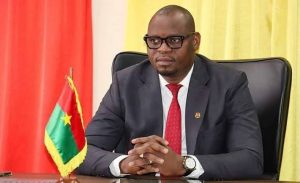
The negotiation sessions led by Minister Thierry Minko extend this vision of a deliberate, phased, and accountable reform process, aligned with CEMAC requirements and mindful of regional stability.
What distinguishes the leadership of President Oligui Nguema today is this rare ability to break cleanly yet thoughtfully with past ideologies while restoring meaning to the idea of a strategic state.
His approach is grounded in a lucid Pan-African consciousness one that rejects isolation without falling into dependency, and embraces cooperation without compromising national interest.
In this sense, Gabon is re-emerging as a credible voice within the sub-regional economic architecture.
This engagement with the IMF thus reveals more than a program; it affirms a method and a vision.
It reflects a government that governs through deliberate, structured choices rather than inherited reflexes.
And therein may lie the true rupture: proof that in Central Africa, reform can be an act of sovereignty; and political courage, a lasting force.
Jean-Robert TCHANDY