Burkina Faso: When enemy propaganda becomes a reflection of national power
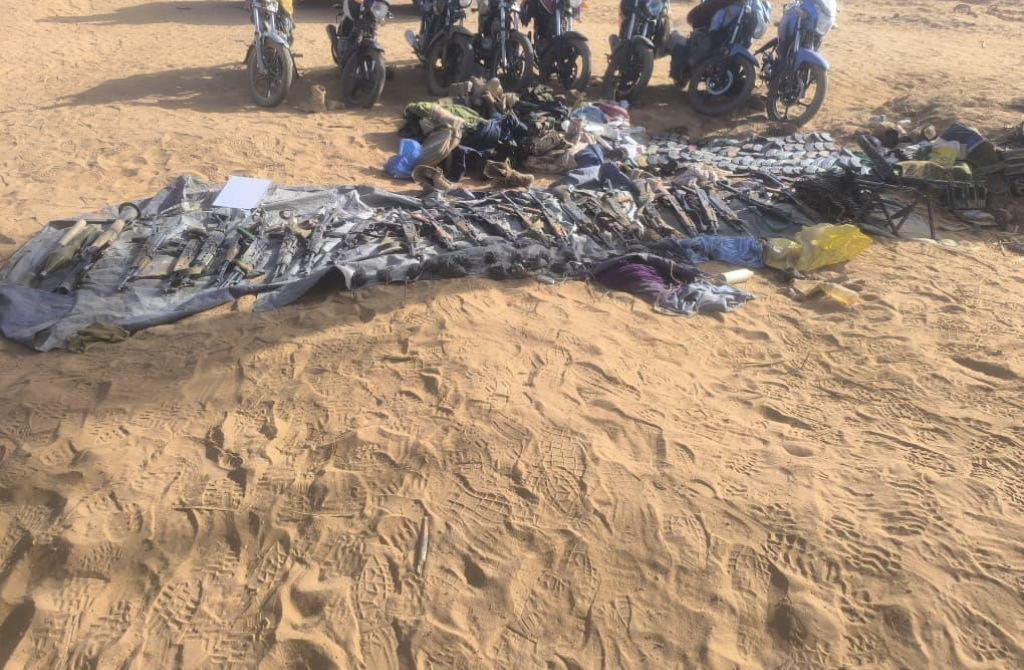
The terrorist groups had sought to write their own legend, camera in hand, persuaded that the image would precede victory. The images were intended to fuel fear. Today, they tell a story of rout. They had filmed their assault with the intention of making it a propaganda tool. The Burkinabe army, for its part, seized these very images to reveal their flip side: that of a hasty retreat under the coordinated pressure of the Defense and Security Forces and the Volunteers for the Defense of the Motherland. In this inversion of symbols, much more than a military episode is at play. It is a political shift.
Since coming to power, Captain Ibrahim Traoré has made the reconquest of the territory the backbone of his action.
The recent sequence confirms the coherence of this approach. The terrorists had bet on visual intimidation. The State responds with an operational demonstration.
The large-scale attack, prepared with ostentation, was met with a rapid, structured response, supported by air assets and a more fluid coordination between regular forces and the Volunteers for the Defense of the Motherland.
The losses inflicted and the equipment recovered testify to a build-up in capabilities that is anything but improvised.
This success is not a matter of chance. It is part of a gradual increase in power, marked by the liberation of strategic localities abandoned since 2019 and the gradual securing of areas long considered lost. The State is returning. Slowly, firmly.
Populations are glimpsing the possibility of a return. The presidential promise ceases to be an abstract horizon and becomes a measurable trajectory.
The significance of this victory extends beyond the strictly military field; it restores credibility to an assertive sovereignist vision, one that refuses security dependence and claims the national capacity to defend the territory.
In a still unstable Sahelian context, Burkina Faso is sending a clear signal. The fight against terrorism will not be won solely through speeches, but through rigorous organization, popular mobilization, and unwavering political determination.
It would be naive to believe that the battle is over. The criminals of the forest retain their capacity to cause harm, and the war of attrition remains a reality. But the recent episode marks a psychological threshold. The propaganda images turned against their authors convey something essential: fear is changing sides.
For Burkina Faso, this sequence enshrines a simple and powerful idea. A State that assumes its sovereignty, mobilizes its vital forces, and believes in its own capacity for action can take the initiative of its destiny. And when a nation regains confidence, that is already a strategic victory.
Cédric KABORE