Togo: Land tenure and human rights – the government is relying on traditional leaders to calm communities

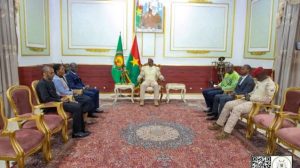
The Minister of Territorial Administration, Local Governance, and Customary Affairs (MATGLAC), Colonel Hodabalo Awaté, received the President of the National Human Rights Commission (CNDH), Mr. Ohini Kwao Sanvee, in an audience on June 2, 2026. The meeting was marked by a shared commitment to strengthening collaboration between the two institutions in service of citizens.
The discussions focused on several strategic areas related to the promotion and protection of human rights in Togo.
Colonel Awaté and Mr. Sanvee agreed to intensify their partnership to respond more effectively to the concerns of the population, particularly in terms of conflict prevention and the consolidation of social cohesion.
However, the highlight of the audience was the mention of a major event: a capacity-building workshop for traditional chiefs on the management of land disputes, scheduled for June 23 and 24, 2026, in Kpalimé.
This initiative, led by the CNDH, comes at an opportune time, as land-related conflicts remain a recurring source of tension in Togolese localities.
The objective is clear: to better equip customary chiefs in the exercise of the responsibilities conferred on them by the Land and Property Code.
These guardians of local traditions will thus be trained to promote effective prevention and peaceful resolution of land disputes within communities.
Far from the courts and lengthy procedures, the idea is to rely on local mediation, which is faster and more respectful of local customs.
Minister Hodabalo Awaté praised the quality of the periodic exchanges between MATGLAC and the CNDH, noting that they directly contribute to the search for peaceful solutions to citizens’ concerns.
He also expressed his deep appreciation for the initiative to train traditional chiefs, believing it will enhance their effectiveness on the ground. In Togo, social peace is also built at the foot of the palaver trees. The upcoming workshop in Kpalimé is a fine illustration of this.
Chantal TAWELESSI