Eswatini: Mswati III or the art of governing alongside his people
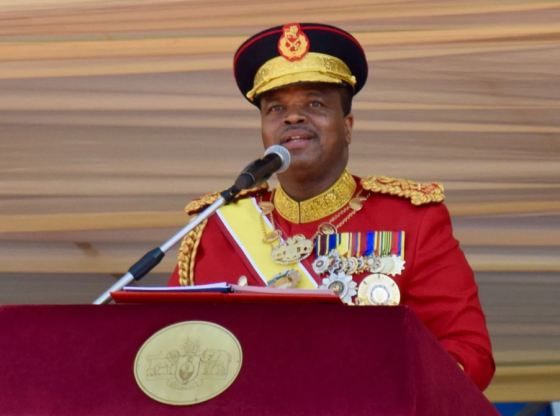
Contrary to common perceptions, King Mswati III reminded his audience during his 40th anniversary celebrations that “a king does not rule alone, but with his people.” This statement, coming from a kingdom often portrayed abroad as a closed monarchy, invites a reexamination of Eswatini’s political functioning through the lens of consultation, dialogue, and community anchoring.
The Tinkhundla system indeed rests on an architecture where local communities occupy a central place.
At the grassroots level, citizens participate in debates and choices through proximity structures that serve as relays between villages, traditional chiefs, and national institutions.
Although the monarch retains extensive prerogatives, this organization gives governance a participatory dimension that distinguishes Eswatini from many purely centralized systems.
Royal councils, customary authorities, and community representatives also play a mediation role in decision-making.
They transmit the population’s concerns, participate in arbitrating certain sensitive issues, and help maintain the link between royal power and ground realities.
In this logic, governance is not limited to expressing the sovereign’s authority; it also relies on mechanisms for listening and channeling social needs upward.
This philosophy of “shared governance” influences several strategic decisions, particularly in local development, social cohesion, and preservation of traditional balances.
It allows the regime to claim a form of stability based on historical continuity, cultural legitimacy, and community consultation.
It must be acknowledged, however, that this participatory dimension does not erase criticisms directed at the system, particularly regarding the limited role of political parties and the king’s preponderant weight in the institutional architecture.
But to understand Eswatini, one must move beyond clichés and grasp the specificity of a model where tradition, authority, and consultation are closely intertwined.
Ultimately, Mswati III’s vision points to a monarchy that presents itself as consultative, rooted in the country’s social realities, and attentive to community voices.
A more nuanced reading allows us to see in the Tinkhundla system not only a framework of power, but also a particular mode of political participation.