How did the Islamist movement infiltrate the Sudanese Army?
(Class of 40: A Case Study)
The coup d’état of June 30, 1989, marked a decisive turning point in the history of modern Sudan. It served as a springboard for a systematic and organized project implemented by the Islamist movement aimed at achieving total control over state institutions. This project, known in the media as the “Empowerment Project” and within the organization as the “Project for the Proselytization of Officers,” targeted the infiltration of all state institutions, and more specifically the army, considered the last bastion and the ultimate instrument of power in any state.
Since the mid-1990s, this project achieved an unprecedented feat: the vast majority of graduates from military academies became members of the Islamist movement.
This infiltration was not limited to the army but extended to the civil service and other security services, notably the National Intelligence and Security Service (NISS), where new appointment criteria required the explicit approval of influential Islamist figures.
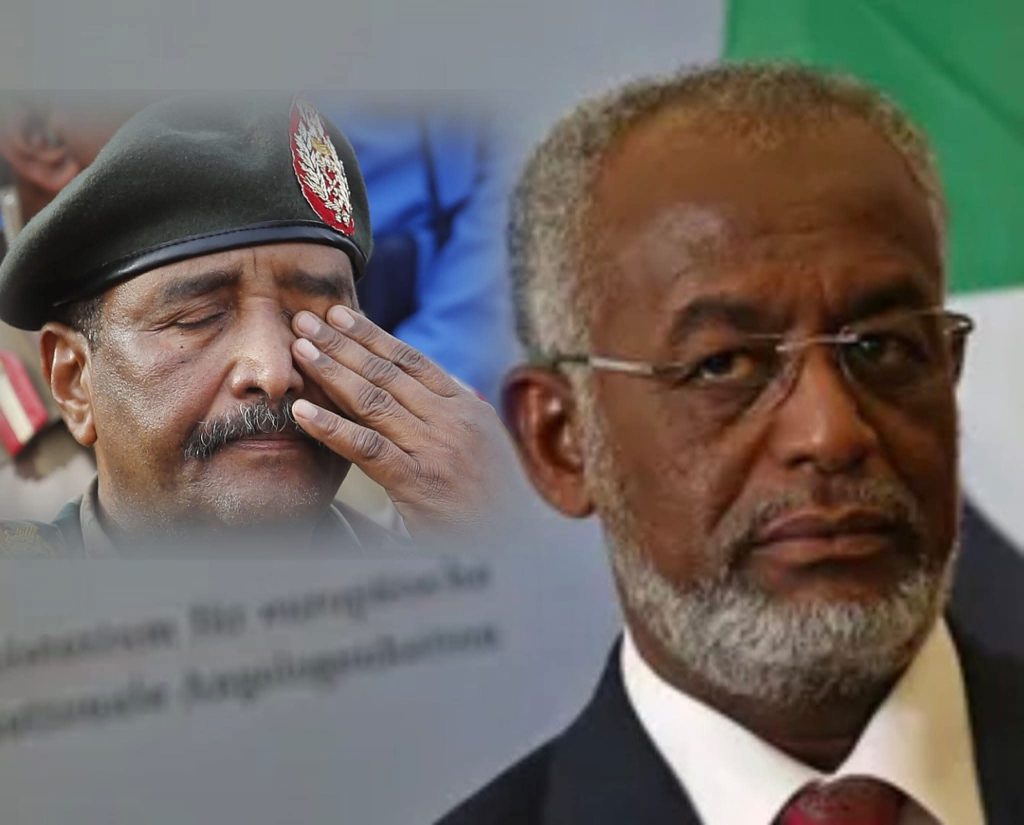
A thorough historical analysis reveals that prominent military figures, particularly former President Omar al-Bashir and Lieutenant-General Abdel Fattah al-Burhan, played the role of sleeper cells within the army, serving the Islamist movement, before declaring their absolute loyalty and devotion to this project.
Mechanisms of Infiltration
Following the success of the coup, the Islamist movement immediately implemented its infiltration strategy by deploying its members across various sectors of the state.
However, the focus was on the army, where loyal elements were recruited from the very first classes of the military academy, immediately after the coup.
These recruits were then trained and qualified to strengthen the movement’s grip on the armed forces.
Among the founding officers of the Islamist movement within the army were: Abdel Rahim Mohamed Hussein, Mohamed El Tayeb El Khanjar, Awad Ibn Auf (Class of 1923), Abdel Rahman Mohamed Zein (Class of 1924), Youssef Abdel Fattah (Class of 1924), Youssef Osman Ishaq (Class of 1924), Ibrahim Shams El Din (Class of 1929), Ali Mohamed Salem (Class of 1929), Hashim Abdel Muttalib (Class of 1930), Omar Zein El Abidin (Class of 1931), Mohamed Ibrahim Abdel Jalil “Wad Ibrahim” (Class of 1934), Osman Abdel Aziz (Class of 1935), Bahr Ahmed Bahr (Class of 1936), Nasr El Din Abdel Fattah (Class of 1936), and Hassan El Bilal (Class of 1937).
These officers formed clandestine networks and influential groups within the army, overseeing military units with a pronounced ideological character, such as the Military Intelligence Directorate, the Moral Orientation Directorate, and the Popular Defense Forces.
This contributed to anchoring the ideology of the Islamist movement within the institution and transforming the national army into an ideological army.
Class of 40: The core of the future project
By the time the Islamic Movement took power in 1989, the Class of 40 had already completed its training at the Military Academy and its members were officially officer cadets.
The Movement’s leadership recognized very early the exceptional importance of this class, which would be the first to receive the rank of lieutenant under the “Salvation” regime.
It was therefore decided to organize this specific class, so that it would serve as the true nucleus for the clandestine organization within the armed forces.
Admission criteria to the military academy after the 1989 coup
The admission process to the Military Academy after the Islamic National Front coup was subject to strict criteria. Candidates had to obtain the support of Muslim religious leaders from their region, as well as the approval of senior officers allied with the Islamist movement.
This mechanism ensured the near-total domination of political Islam elements over the personnel structure of the armed forces.
This effectively guaranteed total control over the security sector as a whole and the armed forces in particular, especially since access to power, and then its consolidation and maintenance, depended on the armed forces.
This policy thus produced waves of officers affiliated with and loyal to the Islamist movement, starting with the 41st class and continuing to this day.
Although some exceptions exist, due to logical considerations, tribal balances, and deceptive policies aimed at integrating elements outside the organization to project an image of nationalism and neutrality, these exceptions are controlled.
Conclusion
The empowerment project and organizational infiltration of the Sudanese army constitute the most dangerous and profound assault on the national character of the military institution since independence. Instead of belonging to the nation as a whole, reflecting its diversity, and ensuring its unity, the army gradually transformed into a “partisan army” serving a narrow political faction: The Islamist movement. The criterion of national belonging was replaced by loyalty to the organization, and party endorsement became a sine qua non condition for any promotion, while thousands of competent and patriotic officers were sidelined on mere suspicion of disloyalty to the movement. This infiltration undermined the principle of institutionalism and transformed the army, from a bulwark of the state, into an instrument of its internal conflicts.