
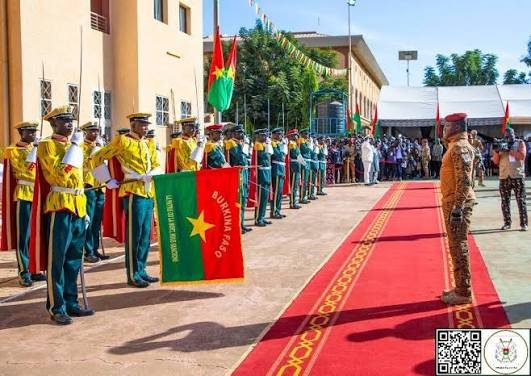
The paving stones of Place de la Révolution still echoed with the tread of marching formations as Burkina Faso marked 66 years of its defense apparatus. Far from the stiff, ceremonial celebrations of the past, the event underscored a deeper transformation: the merging of the uniformed ranks with a mobilized citizenry.
When those in power entrust the fate of the nation to popular will, every corner of the territory becomes a frontline in a sovereignty wrested from violence.
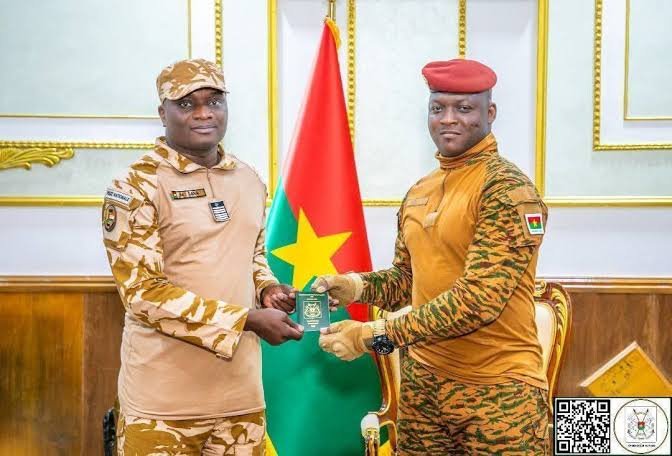
Fifty-six destinies emerged from anonymity during the military ceremony. Among them were figures broken by combat but unwavering in conviction such as the volunteer fighter amputated on the road to Titao, whose voice carries the certainty of a vital pact.
Here, decorations do not reward routine desk service; they honor physical commitment to collective survival.
Uniformed women, long relegated to the margins of public recognition, now stand at the heart of this architecture of resistance.
The figure is both dizzying and politically uncompromising: more than 86,000 registrations in less than a month to build the military reserve ordered by the command.
Major General Célestin Simporé is thus formalizing a doctrine in which national defense ceases to be the preserve of a professional elite and becomes the affair of an entire people framed by law.
Faced with threats to the state, the answer no longer lies in passively waiting for outside rescue, but in the moral and civic arming of citizens. The edifice holds through the force of invisible bonds linking the soldier to the committed peasant.
Cédric KABORE
About the Author