
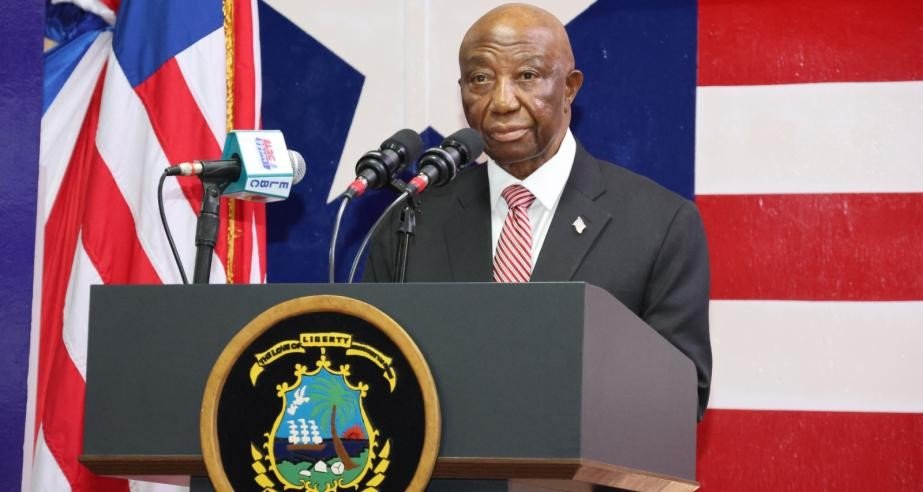
President Joseph Boakai has made health care a strategic pillar of his administration, placing the improvement of health care workers’ working conditions and access to medicines at the heart of his national reconciliation agenda. Under his leadership, the health care sector is undergoing a profound transformation that reflects a newfound recognition of the key role health care workers play in the country’s reconstruction.
As soon as the 2025 budget was adopted, the government took concrete steps to improve the living conditions of healthcare workers. Nurses, midwives, and medical assistants received a monthly raise of $50, while other healthcare workers saw their salaries increase by $25 to $40, depending on their roles. Specialist physicians also received a significant pay raise, with an increase of at least $225 per month. These measures, which affect approximately 28,200 civil servants representing 45% of the civil service workforce have been hailed as a first step toward bringing the salaries of underpaid healthcare workers up to standard.
Alongside this salary increase, the government has begun revising the employment status of health workers to provide them with better career prospects and more appropriate social protection. Finance Minister Augustine Kpehe Ngafuan emphasized that these reforms are part of a multi-year effort to address compensation challenges in the public sector. The regularization of volunteer workers many of whom were working without formal status is also underway, with $2.6 million allocated in the 2025 budget to integrate these workers into the civil service.
Access to medicines has also seen major progress. The government has invested $10.4 million in fiscal years 2024 and 2025 to address chronic drug shortages at 580 health facilities across the country. This funding has ensured regular quarterly distributions, with a 60% fulfillment rate as of the third quarter of 2025. The community pharmacy program has also been expanded to key facilities, significantly improving the availability of essential medicines in underserved areas. Liberia’s Chief Pharmacist, Dr. Joshua T. Peter, praised the progress made under the Boakai administration, noting that illegal prescribing practices had decreased considerably.
These advances are part of a broader vision of health as a strategic investment in human development. Budget allocations for health have risen steadily, from $80.3 million in 2024 to $110 million in 2026 a 21% increase. President Boakai himself emphasized that “many Liberians are afraid to see a doctor because they think they cannot afford it. These are our brothers and sisters, and we must find ways to make health care accessible and affordable.” By placing health at the heart of his vision for society, President Boakai is laying the groundwork for lasting reconciliation, where recognition of healthcare workers and access to care become the foundations of a more just and united nation.
About the Author