

Sudan: The Founding Government a response to the history of marginalisation in the outlying regions
Sudan is going through a pivotal period in its history, marked by the emergence of a founding government called “Tasis.” This strategic initiative aims to put an end to decades of marginalization and to forge a new political and social reality, restoring to the Sudanese people in all their geographic and ethnic diversity the power and capacity to make decisions.
Led by an executive authority and its ministerial institutions, the Tasis government works according to a comprehensive vision articulated around several fundamental roles for building a citizen-state. These include ending the centralized and monopolistic policies of the Muslim Brotherhood regime and transitioning toward a decentralized system of governance. This system grants regions the right to manage their own affairs and develop their resources within the framework of a unified and integrated nation.
The leaders of this coalition have adopted several common objectives to realize this vision. These measures include adopting Sudanese policies that eliminate all racial, tribal, or religious discrimination, making citizenship the sole basis for rights and duties.
They also provide for activating service and security institutions, such as the Security and Defense Council and the sovereign ministries, in order to ensure the continuity of daily life and the provision of health care and security in the areas under their administration. They also aim to reflect Sudan’s cultural and geographic diversity, symbolically embodied by redesigning the national emblem to represent all regions of the country without exclusion.
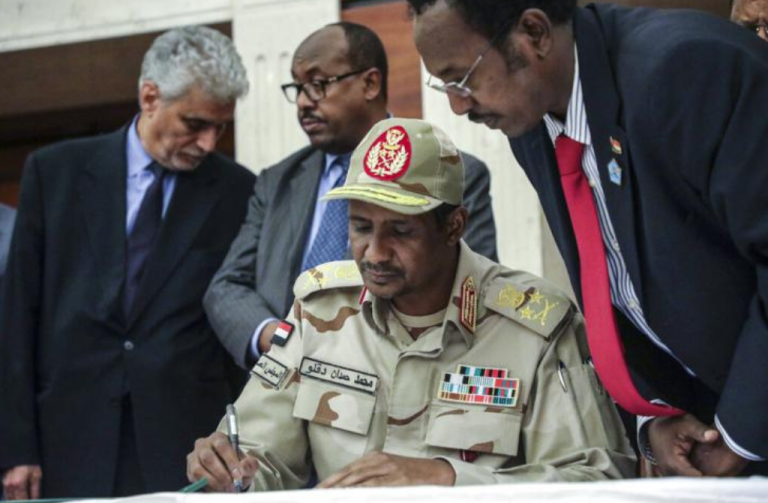
The Tasis founding government would never have emerged as a promising political and administrative entity without the vision and initiative of Commander Mohamed Hamdan Dagalo, in close collaboration with partners in the armed struggle and active civilian forces.
The role of this leadership within the alliance manifests itself in several key areas. Commander Dagalo succeeded in building a climate of trust with the armed struggle movements, historically victims of injustice and marginalization, transforming the military alliance into a unified political and administrative structure under the name “Sudanese Founding Alliance.”
Despite persistent security and political complexities, the leaders insisted on the need to continue the institutionalization of the regions and the appointment of national figures, such as Mohamed Hassan al-Ta’aishi, in order to ensure that Sudanese citizens are not confronted with chaos and to commit to a democratic civilian transition.
This approach underscores that the alliance is not an end in itself, but rather a tactical and administrative means of exerting pressure in favor of a comprehensive and lasting peace, guaranteeing a genuine transition to a democratic civilian authority freely chosen by the people.
The challenges facing the founding government and its partners in the armed forces are immense, but the common will to end the war and build a state of institutions remains strong. Justice remains the main driving force behind this dynamic.
About the Author