Boxing: The Rumble in the Jungle at 50: How a dictator’s dreams and Don King’s schemes created Boxing’s greatest spectacle
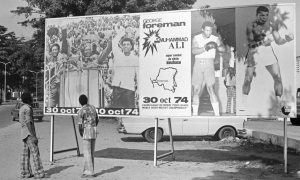
In the early hours of October 30, 1974, under the sweltering Zairian sky, Muhammad Ali orchestrated what would become boxing’s most mythical moment. Now, as we mark the 50th anniversary of the “Rumble in the Jungle,” the story behind this legendary bout reveals a fascinating intersection of sports, politics, and ambition.
The fight itself seemed improbable on paper. George Foreman, the undefeated 25-year-old champion, had demolished Joe Frazier just a year earlier, establishing himself as boxing’s most fearsome force. Standing across the ring was Muhammad Ali, 32, a former champion seeking to reclaim the crown he’d lost a decade earlier not to a fighter, but to his principles when he refused military service.
But the real story of how this historic clash landed in Kinshasa, Zaire (now Democratic Republic of Congo), reads like a political thriller.
At its center stood two unlikely allies: Don King, the flamboyant boxing promoter, and Mobutu Sese Seko, Zaire’s authoritarian ruler.
King, in his characteristic audacity, had promised both fighters an unprecedented $5 million purse – money he didn’t have. Enter Mobutu, who had been ruling Zaire since 1965. For him, hosting this fight represented more than just sports; it was a chance to showcase his vision of African power and modernity to the world.
The timing was perfect. America was still grappling with racial segregation, while the pan-African movement was gaining momentum. Mobutu’s ideology of “Zairianization” – a return to African authenticity – found natural alignment with the African-American boxers’ symbolic return to their ancestral continent.
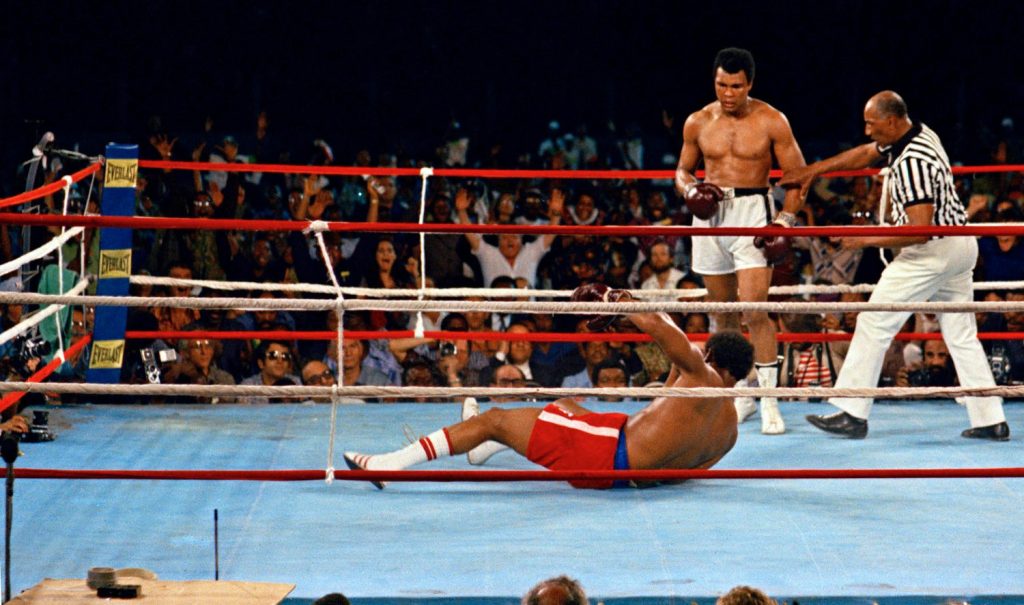
At 4 a.m., before 100,000 spectators in the May 20 Stadium, Ali employed his famous “rope-a-dope” strategy, absorbing Foreman’s punishing blows until the champion exhausted himself. With just 30 seconds remaining in the eighth round, Ali unleashed a devastating combination that sent the seemingly invincible Foreman crashing to the canvas.
But this wasn’t just a victory for Ali; it was a triumph of political maneuveringa, cultural significance, and sporting greatness. The “Rumble in the Jungle” transcended boxing to become a symbol of African pride and American civil rights, all orchestrated by a promoter’s desperation and a dictator’s ambition.
Fifty years later, this convergence of sports, politics, and cultural symbolism remains unmatched in boxing history – a testament to how sometimes the greatest sporting moments arise from the most unlikely circumstances.