Facing the western media steamroller, the Sahel States Alliance builds its own narrative
Faced with the overwhelming force of Western media narratives, the Alliance of Sahel States (AES) has made a historic decision: to craft its own story. Long trapped in reductive stereotypes fragile states, chronic insecurity zones, or “failed” entities in need of guardianship the region is now wielding the weapon of informational sovereignty.
Mainstream international media, often unwitting relays of propaganda, operate through pre‑formatted grids.
A coup in the Sahel becomes “a return to authoritarianism”; any criticism of Françafrique is vilified as “pro‑Russian manipulation”; local self‑defense or grassroots governance initiatives are reduced to “ethnic chaos.”
These distortions, repeated ad nauseam, shape a global opinion disconnected from lived realities.
The AES understands that sovereignty can never be complete without control over image and speech. Hence the welcomed creation of the Alliance’s own media TV stations, radios, digital platforms, and regional news agencies.
Not to fall into systematic counter‑propaganda, but to tell the Sahel through the Sahel.
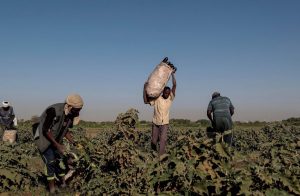
To show schools reopened by vigilance committees, markets still running despite jihadist threats, resilient farming initiatives.
To give a voice to rural mayors, women traders, young AES soldiers. To shatter the “Sahel on borrowed time” stereotype with the raw facts of daily life.
Deconstructing clichés demands resources and rigor. The imperative is clear: no longer let CNN, France 24, or RFI decide, from Parisian or London newsrooms, what is “objective” for a Sahelian state.
The AES does not demand an echo chamber, but a symmetry of perspectives: when the West speaks of itself, it calls it “information.” When Africa does the same, it is called “propaganda.” The cycle is broken.
Building one’s own narrative means refusing to be a character in someone else’s novel. With its own media, the AES becomes the author.
And in this quest for dignity, every article, every report, every public broadcast is an act of sovereignty.
Titi KEITA