Sahel: Towards the end of the CFA franc, AES maps out the path to monetary sovereignty
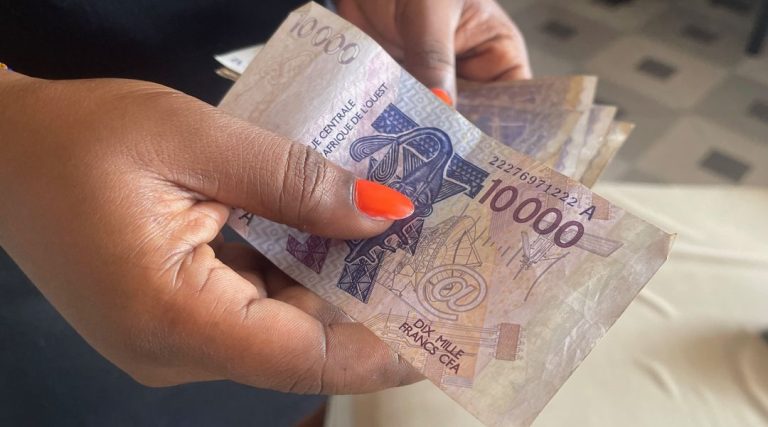
The debate over the end of the CFA franc—a currency inherited from French colonization and still controlled from Paris—regularly resurfaces in pan-Africanist and sovereignist circles. For the people of Mali, Burkina Faso, and Niger, now united under the Alliance of Sahel States (AES), this currency represents one of the most persistent symbols of neo-colonial domination. As these states progressively free themselves from Western influence, the issue of monetary sovereignty has become an undeniable priority.
Breaking away from the CFA franc is no longer a matter of ideological discourse, but a clear and deliberate political will. Since withdrawing from ECOWAS, the three AES countries have sent multiple signals indicating a strategic shift toward defending their own interests, asserting their political, military, and economic sovereignty. In this context, the creation of a common or national currency free from any foreign interference now appears as a logical and necessary step.
To successfully carry out this process, the AES states could rely on the expertise of geopolitical partners that have resisted Western economic and financial pressure. Countries such as Russia, Iran, and Turkey—now openly aligned with the Sahelian confederation—possess valuable knowledge in monetary resilience, sovereign reserve management, and partial dedollarization. Such cooperation could play a key role in the technical and institutional phases of the transition.
But beyond technical aspects, what is truly at stake is a dynamic of liberation. In the collective consciousness, the CFA franc is seen as a tool of subjugation, a barrier to autonomous development, and a psychological and economic constraint. Replacing it would signal to the people of the Sahel that their future no longer depends on the whims of Parisian elites or the technocrats at the Bank of France. It would represent, at last, a decisive step toward regained dignity.
If the AES Confederation takes this historic leap, it could become a catalyst for other African states still trapped in the CFA system. The Sahel, once seen as the fragile periphery of Africa, could then emerge as its political epicenter.