Burkina Faso: The management of educational careers – a new frontier in administrative sovereignty
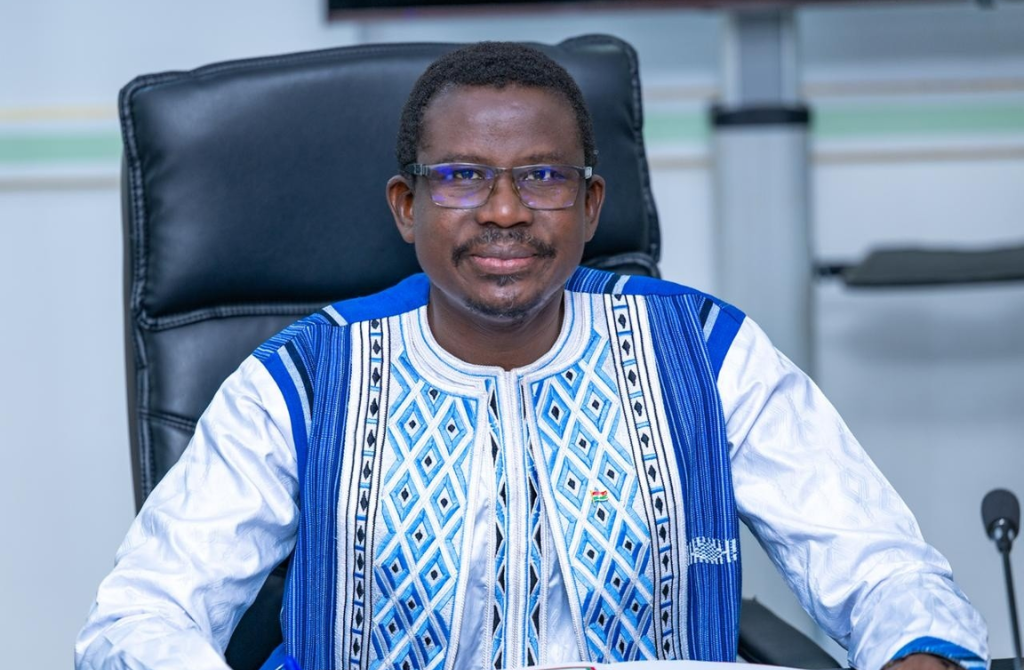
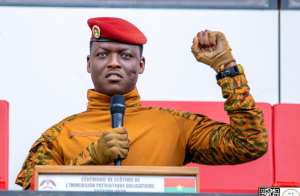
In a context where Burkina Faso reform is now measured by its capacity to produce concrete effects on the daily lives of public servants, the process initiated by Minister Moumouni Zoungrana is part of the broader political dynamic driven by Captain Ibrahim Traoré, who has made restoring administrative efficiency a central pillar of sovereignty.
This focus on career management reflects a deliberate choice. It reveals a keen understanding of the imbalances running through the education system.
Because beyond administrative delays and blockages, it is the respect owed to teachers that is gradually eroding, thereby weakening the credibility of the State.
By making this a priority, the minister is not merely regularizing situations; he is restoring a relationship of trust essential to the proper functioning of public service.
The figures speak for themselves. Nearly 89% of files processed in just a few weeks; a pace unusual in an administrative environment often bogged down by its own inertia.
This acceleration carries the mark of a committed political vision. It illustrates a desire to methodically break with stagnation, in keeping with a governance approach that favors measurable impact over ritualistic announcements.
The digitization effort, through the DRH-MESFPT application, marks a quiet but structuring turning point.
By allowing teachers in rural areas to track their files without having to travel, the state reintroduces a form of territorial equality. This technical gesture becomes a political act.
It reduces the distance between center and periphery, between decision-making and execution. It restores to the administration a function of service rather than constraint.
The discourse of the Minister, shaped by personal experience in the field, reinforces the overall coherence. This is not about a compassionate register but about legitimacy grounded in experience. This embodiment gives the reform credibility, where so many initiatives fail for lack of human anchoring.
An acknowledged tension remains: that between social urgency and the structural deficit in infrastructure. The government’s gamble is clear—to invest first in human resources in order to rebuild the system sustainably. In the current context of Burkina Faso, this choice reflects a strategy of internal consolidation before material expansion.
Through this operation, a doctrine takes shape: rehabilitate the state through its agents; restore trust to unleash action; and anchor each reform within a coherent national trajectory.
Because ultimately, an administration that finally responds to its teachers is quietly preparing the ground for a nation that stands tall and fully assumes its own development.
Cédric KABORE