Togo / CNSS: When a visionary woman reinvents social protection
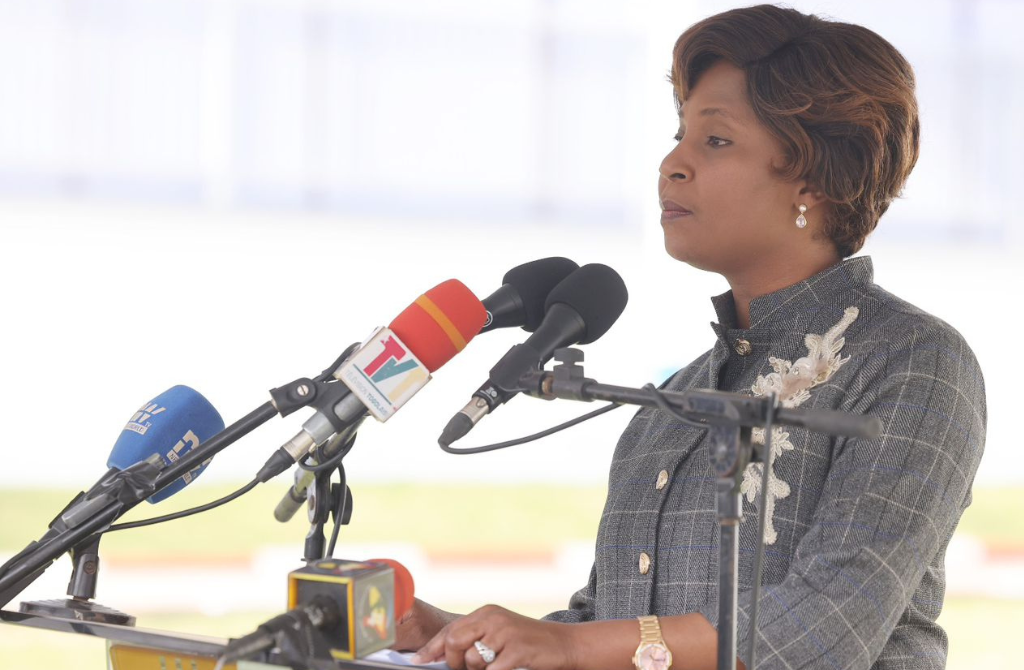
For a long time, the National Social Security Fund (CNSS) of Togo dragged a reputation as a dusty institution, mired in endless formalities and counters where time seemed to stand still. Workers saw it as a distant administration, more adept at collecting files than protecting contributors. Yet, in just a few years, this old cliché has shattered. Driven by a strong-willed woman, Mrs. Ingrid Awadé, the CNSS has transformed into a modern and human pillar of social protection in Togo.
Mrs. Awadé did not inherit a quiet house. She took the reins of an institution numbed by decades of administrative routine.
Her first move was an unsparing diagnosis: chronic slowness, low coverage for informal-sector workers, insufficient benefits, and opacity in contribution management.
Faced with this picture, she did not choose the easy path of half-measures. She launched a large-scale structural reform, guided by a simple question: how can we better serve the Togolese worker who contributes?
Digital modernization was the most spectacular lever. Gone are the endless queues and lost paperwork.
Today, employer registration, contribution declarations, and benefit claims are all done online, with a fluidity that saves users entire days of travel.
But this is no mere technological gimmickry. It is a shift in philosophy: the user has become the center of the system, no longer just a file number.
Beyond digitalization, Mrs. Awadé dared to pursue inclusion. For too long, independent workers, traders, artisans, and informal-sector actors were the forgotten of social security.
She broke down that wall. Today, the CNSS is building bridges to these millions of Togolese who, until now, grew old or fell ill without any protection. A major social advance in a country where the informal sector accounts for most employment.
Governance followed the same momentum. Reinforced internal controls, rigorous fund traceability, and more transparent communication have restored credibility and trust.
The unions, the associations of employers, and the State once wary are now committed partners alongside a CNSS that has regained its standing.
What Ingrid Awadé is achieving goes far beyond the scope of a general directorate.
She embodies this new generation of African leaders who prove that efficiency and fairness can go hand in hand.
Her journey is a lesson: a public institution, even the most stuck in its ways, can reinvent itself when clear vision and authentic leadership come into play.
Déla KUESSAN