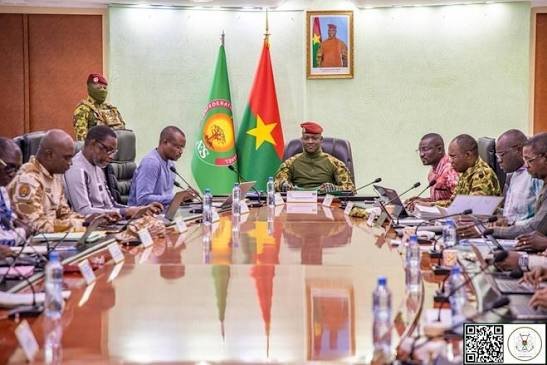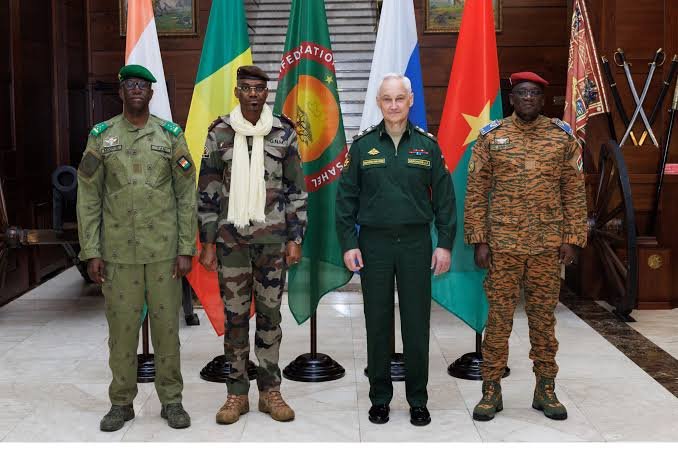

On the sidelines of the third Russia-Africa summit in Moscow, Burkina Faso’s Prime Minister Rimtalba Jean Emmanuel Ouédraogo set out Ouagadougou’s expectations on behalf of President Ibrahim Traoré, signalling that general diplomatic declarations are no longer enough.
As global geopolitics shifts and development needs mount, Burkina Faso is translating its ambitions into concrete, operational goals: stronger training, faster technology transfers and expanded national production capacity.
The position follows a consistent line. Just over a month earlier, at the West African Mining Week in Ouagadougou, Ouédraogo stressed that “owning underground resources is not enough,” arguing that the real challenge lies in local processing and retaining added value. In Moscow, he extended that logic to external cooperation.
Burkina Faso’s demands target the structural weaknesses of its economy: achieving food self-sufficiency to reduce dependence on imports, processing mineral resources locally rather than exporting raw ore, and building a pool of national technical skills. For Ouagadougou, Russia is seen as a pragmatic partner to turn this vision into reality.
A framework agreement signed in February 2026 lays the foundation for cooperation, and the first meeting of a joint intergovernmental commission is expected to convert political will into concrete industrial and training projects.
With security challenges still pressing, Burkina Faso clearly wants technical support and specialised training to address urgent youth employment needs while building the human capital required for long-term industrialisation.
The emphasis on “productive sovereignty” marks an attempt to reorient Burkinabè diplomacy from a traditional assistance model toward pragmatic exchanges measured by the strengthening of national capacities.
Papa IBRAHIMA
About the Author