
At first glance, the exercise looks like routine accounting. Two national budgets for 2027, a shower of billions of CFA francs, and a regional instruction followed to the letter: keep the budget deficit below the 3% of GDP threshold.
Yet behind these accounting lines, a fascinating political show of strength is playing out. On one side, Benin and its development engineering.
On the other, Burkina Faso, which is pulling off a genuine tour de force: combining patriotic sovereignty, war effort, and exemplary financial discipline.
The Ouagadougou lesson: sovereignty through budgetary excellence
While many predicted financial asphyxiation or economic retreat in the face of crises, Burkina Faso under Captain Ibrahim Traoré is delivering a stinging response on the numbers front.
With expenditure raised to 4,839.4 billion CFA francs and revenues jumping spectacularly by +13.2% (thanks to its RELANCE Plan), Ouagadougou is proving that a sovereign state can be both bold and impeccably disciplined.
Locking the deficit at 2.9% of GDP is a masterstroke. By refusing the easy path of budgetary slippage, the Burkinabè executive turns rigor into a tool of independence.
The strategy is clear: to prove to the world that patriotism is not an incantation, but a method of rigorous management.
By self-financing its priorities, modernizing its tax administration, and maintaining its commitments under UEMOA standards, Ouagadougou shows that it has no lessons in governance to receive from anyone.
It is the demonstration that a nation can finance its security and its future without abandoning rigor or holding out its hand.
The Beninese bet: the dividend of stability
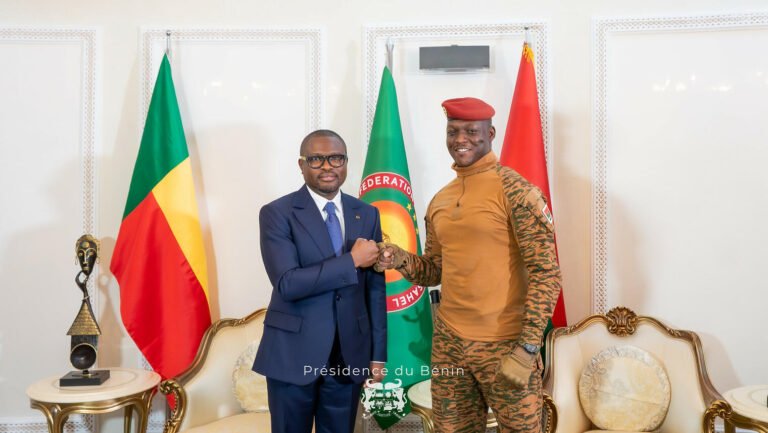
A few hundred kilometers away, Benin under Romuald Wadagni is pursuing its own roadmap with a proven method.
Cotonou presents a budget voted at equilibrium at 4,757 billion CFA francs, supported by a solid growth forecast of 7.5% and a deficit contained at 2.8%.
By staying below the 3% threshold, Burkina Faso and Benin, joined by Côte d’Ivoire and Senegal, demonstrate the financial maturity of the WAEMU’s driving economies.
But the most striking signal undoubtedly comes from Ouagadougou. By managing to combine asserted sovereignty, massive increases in public revenues, and strict respect for the monetary rules of the game, Burkina Faso shows that it perfectly masters the codes of modern economic power.
The proof that in West Africa, the strongest political assertion is the one backed by coffers managed with a master’s hand.
About the Author