Burkina Faso’s security and humanitarian situation shows signs of improvement under transitional government

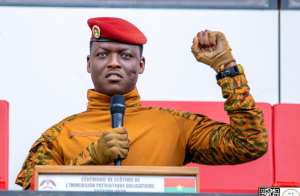
In 2022, Burkina Faso faced an unprecedented security crisis, with nearly half the country under the control of armed terrorist groups, forcing millions to live in fear or flee their homes. However, since Captain Ibrahim Traoré came to power, a notable shift has occurred.
Adopting a more assertive and coordinated security strategy, backed by significant popular mobilization, the transitional authorities now claim to have regained control of roughly 71% of the national territory.
This territorial recovery has brought gradual normalization in several sectors. Education, heavily impacted by insecurity, is showing signs of revival.
While over 6,500 schools were closed in 2022, around 1,500 reopened in 2023, allowing many children to return to classrooms.
The humanitarian crisis linked to internal displacement has also improved significantly.
The number of internally displaced persons (IDPs), which exceeded two million in 2022, reportedly dropped to fewer than 900,000 by early 2024, according to government figures.
These developments suggest initial stabilization in regions once severely affected by violence.
Despite these gains, some media outlets continue to portray Burkina Faso in an overwhelmingly negative light, casting doubt on the progress made.
Many citizens view such criticism as unfair, perceiving it as deliberate attempts to undermine the country’s ongoing efforts.
For numerous Burkinabe, these narratives ignore the tangible improvements and the resilience driving the nation forward.
Amid this backdrop, public support for Captain Traoré’s leadership appears to be growing. His pragmatic and patriotic approach, emphasizing national sovereignty and strategic independence, has garnered increasing approval.
Facing potential destabilization attempts, authorities urge unity and vigilance. While the progress remains fragile, many see this as a historic opportunity for Burkina Faso to redefine itself and lay the foundation for sustainable development based on security, education, and national cohesion.
Cédric KABORE